Booked Solid Podcast

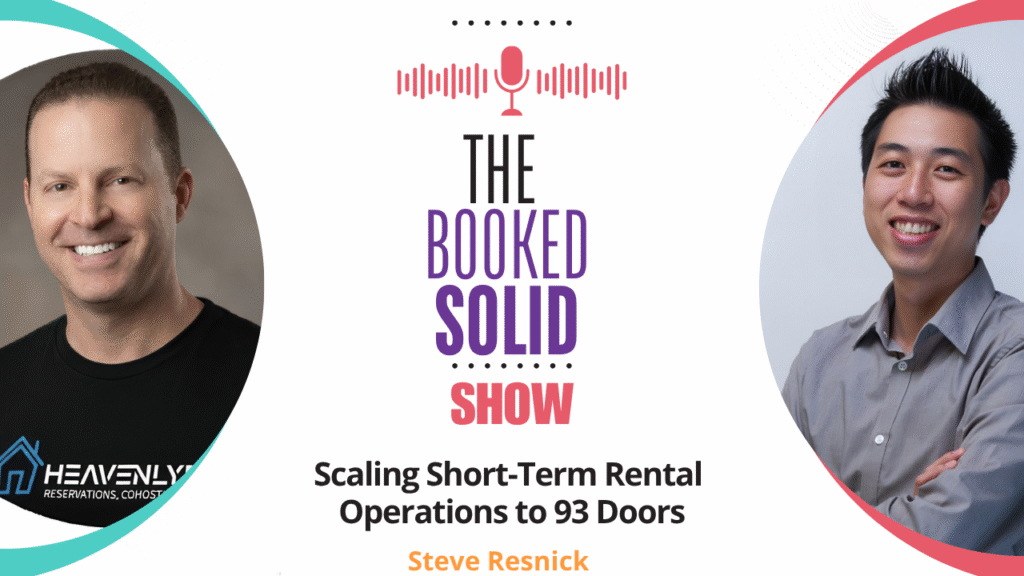
Scaling Short-Term Rental Operations to 93 Doors With Steve Resnick

🌅 From Tragedy to 93 Doors: How One Operator Built Ocean City’s #1 STR Brand With Steve Resnick “It’s not happening to you. It’s happening for you.” — Steve Resnick There’s a moment in this episode where Steve casually mentions a poster board hanging on his bedroom door — 120 little squares, each one waiting for a sticker that represents a new property under management. Every morning, he sees the squares. Every morning, he asks himself the same question: what do I need to do today to get closer to the goal? That single image tells you almost everything you need to know about how Steve Resnick operates. In a short-term rental industry full of operators chasing growth in every direction, Steve’s discipline is almost old-school. Pick a number. Make it visible. Make decisions through it. This conversation digs into how that focus translated into 93 properties in Ocean City, New Jersey — and what it actually takes to deliver consistent five-star experiences at that scale. 🏖️ 👤 Meet Steve Resnick Steve Resnick is the visionary founder and CEO of HeavenlyRez Vacation Rentals, the fastest-growing short-term rental company in Ocean City, New Jersey. He has redefined what modern hospitality looks like — blending technology, heart, and human connection to deliver a five-star experience for both guests and homeowners. Under his leadership, HeavenlyRez was ranked #1 Property Management Company by AirDNA in 2025 for the Ocean City, NJ market and has earned thousands of five-star reviews — the most in the region. The company maintains an industry-leading 6.5-minute average response time and offers 24/7 guest and owner support. Steve is a Certified Short-Term Rental Co-Host, Multi-Year Golden Host Award Winner, and STR Secrets Boardroom Member. He’s been featured on multiple short-term rental podcasts, served as a panel speaker at the STR Wealth Conference, and is a #1 Best Selling Author for his contribution to Hospitable Hosts: Couples Edition. 🧭 The Origin Story Behind HeavenlyRez Steve’s path into hospitality wasn’t planned. After more than 20 years in technology program management at a major financial institution, he and his wife Kim bought a beach property in Ocean City in 2015 — somewhere to make memories with their young daughter. Then came tragedy. Their four-year-old daughter passed away. The property they’d planned to fill with family vacations became something else entirely: a place to rebuild. When they eventually had another daughter, they returned to Ocean City and started thinking about creating that experience for other families. Frustrated with the local management company handling their rental, Steve took it over himself — and the numbers immediately spoke for themselves. One property became three. Then COVID hit. Then a neck injury sidelined him from his corporate role. He used the recovery time to get his realtor’s license, build a vision, and commit fully to the business that had been quietly growing on the side. Three years later, he’s at 93 doors with a clear runway to 120 by the end of 2026. The chapter he co-authored in Hospitable Hosts: Couples Edition is appropriately titled Never Let a Good Crisis Go to Waste. 🌊 🎯 The Vision Board That Drives Every Decision The poster board on Steve’s bedroom door isn’t just motivational decor. It’s a decision-making framework. When he started hiring, he didn’t hire for where the business was — he hired for where it was going. When he evaluated whether to lease a 5,800-square-foot commercial building (the new HeavenlyRez Hospitality Hub), the question wasn’t do I need this today? It was will I need this at 120 doors and beyond? This is the kind of forward-looking discipline that’s easy to nod along with and surprisingly hard to execute. Most operators react. Steve plans the gap between current state and target state, then closes it methodically. For more on this mindset shift, the scaling a short-term rental business with systems breakdown covers why infrastructure has to outrun door count. 🏢 Why HeavenlyRez Built a Centralized Hospitality Hub One of the most fascinating operational decisions Steve shares is the move toward centralizing inventory and amenities in a dedicated facility — instead of relying on owner closets at each individual property. His logic is brutally honest: every property is essentially a separate warehouse. Owners leave closets unlocked. Cleaners can’t always control what guests take. Inventory levels vary by location. At three properties, you can manage that chaos. At 93, you can’t. By consolidating amenities — standardized Keurig and drip coffee makers, beach chairs, beach tags, luxury essential kits with shampoo and conditioner, paper goods, even pizza cutters — into one central hub, HeavenlyRez removes variability from the guest experience. A guest who books a beachfront condo gets the exact same amenity standard as one who books a bayfront unit. “The most important thing for a guest is their first impression. Is it clean? Is it consistent? When you go to a Marriott, you always know what you’re getting. I wanted that for every single one of our properties.” This kind of standardization is also why HeavenlyRez doesn’t take properties outside Ocean City. Geographic focus isn’t a limitation — it’s the unlock. The team, the warehouse, the SOPs, and the cleaning crews are all built around one market. 🛠️ Inside the HeavenlyRez Tech Stack Steve’s background in technology shows up in nearly every layer of the operation. The current stack includes: The smart device layer alone is doing meaningful work. Unique guest codes are auto-generated and activated only during the check-in window. Thermostats automatically shift to eco mode the moment a guest checks out. Door sensors shut off the AC if the patio door is left open for more than 10 minutes. Water sensors have prevented countless leaks before they became real damage. This is the kind of infrastructure that enables HeavenlyRez to deliver a 6.5-minute average response time — because the system flags problems before guests or owners ever have to. 🤖 Where AI Fits Into the Operation The most forward-leaning part of the conversation is about AI.

CraftedStays Blog Posts

Choosing the Right PMS for Your Vacation Rental: OwnerRez Guide

Exploring OwnerRez for your vacation rental? This guide breaks down features, pricing, and ideal use cases — with insights straight from their team. Picking a property management system feels a bit like choosing a business partner. You’ll spend hours inside this software every week. It’ll touch nearly every part of your operation — from the moment a guest inquires to the day you reconcile your books. OwnerRez has been around for over a decade, built by vacation rental owners who got tired of duct-taping spreadsheets and workarounds together. We reached out to their team directly to get the full picture. Here’s what we learned. Why Pair Your PMS with CraftedStays? Your PMS handles operations — bookings, calendars, and guest communication. But the website builder that comes bundled with it? Usually an afterthought. CraftedStays handles what comes before the booking: turning website visitors into guests. We focus on conversion-optimized design, fast mobile performance, and SEO that brings in organic traffic — while syncing seamlessly with your PMS so you’re not managing data in two places. The Short Version OwnerRez positions itself as “an internationally-recognized leader in the vacation rental industry for channel management, CRM, PM, accounting, messaging, and websites.” That’s a mouthful, but it reflects what the platform actually does: handle nearly every piece of the vacation rental puzzle under one roof. Who Should Consider OwnerRez? Two types of operators tend to thrive here. Self-managing homeowners. If you own a cabin, beach house, or mountain retreat and handle everything yourself, OwnerRez automates the repetitive stuff — guest messages, booking confirmations, payment collection — so you’re not glued to your phone. Property managers with owner relationships. Managing rentals for other people adds complexity. You need clean reporting, expense tracking, and owner portals. OwnerRez built these tools into the core product rather than bolting them on as afterthoughts. Three Features That Keep Users Around When asked what their customers rely on most, the OwnerRez team pointed to three capabilities: Automated messaging. Pre-arrival instructions, check-in details, review requests — the platform sends these automatically based on triggers you set. Most operators save several hours per week here. Reporting and owner statements. Revenue tracking, expense management, and commission calculations are handled within the system. Property managers running units for owners get professional statements without wrestling with spreadsheets. Direct booking websites. OwnerRez includes tools to build and host your own booking site. Guests can search availability, book, and pay without you touching a third-party platform. How Channel Management Works This is where OwnerRez takes a different path than many competitors. Rather than routing through third-party channel managers (which often charge a percentage of every booking), OwnerRez built direct API connections to Airbnb, Vrbo, Booking.com, and other major platforms. The practical benefit? Faster syncing, fewer double bookings, and no revenue-based fees on top of your subscription. “Instead of using third-party managers, we built direct partnerships with the major channels,” the team explained. “So we don’t need to charge a percent of your revenue.” For operators listing across multiple OTAs, that difference adds up over time. Pricing Structure OwnerRez uses straightforward per-property pricing with optional add-ons. Pricing Element Details Billing model Monthly, based on property count Booking fees None Transaction percentages None Setup charges None Contracts No long-term commitment required Free trial 14 days The model makes it easy to project costs as your portfolio grows. What you see is essentially what you pay. Getting Help When You Need It Support matters, especially during setup when questions pile up fast. Support Channel What You Get Email support Detailed responses to complex questions Phone support Real-time conversations with their team Rezzy AI Chat Quick answers for common questions Live webinars Ongoing learning and platform updates The combination of human support and AI-powered chat means simple questions get fast answers while complex issues still reach people who can dig in. The Onboarding Experience Starting with a new PMS can feel overwhelming. OwnerRez structures the process around three steps: This blended approach lets you self-serve when you want to and get hands-on help when you’re stuck. Addressing the “Steep Learning Curve” Concern Some operators hesitate because they’ve heard OwnerRez takes time to learn. The team addressed this directly: “We have taken everyone’s feedback and made a platform that is incredibly powerful and straightforward to set up, with better onboarding flows, live help, and detailed support documentation and walkthrough videos.” Their take? The setup investment pays back through automation savings once everything’s running. There’s truth to that — platforms with deep customization often require more upfront configuration than simpler tools. The Philosophy Behind the Product What stood out most from our conversation was the company’s origin story. OwnerRez was created by vacation rental owners — people who managed their own properties and understood the daily friction firsthand. That perspective still shapes how they build. “For more than a decade, we have devoted ourselves to providing truly great vacation rental experiences for guests,” they shared. “Now, we devote our time to providing really good software for vacation rental owners and PMs.” They also emphasized what they call a “People First” approach: “We believe that people — both customers and employees — matter more than profits.” Whether that philosophy resonates depends on what you value in a software partner. But it does explain why OwnerRez has maintained a loyal user base while larger, venture-backed competitors have come and gone. Bottom Line OwnerRez makes sense if you want comprehensive vacation rental software without revenue-based fees, need robust owner management tools, or prefer a platform built by people who actually run rentals themselves. The free trial and demo webinars make it easy to test the fit before committing. This guide was developed with input directly from OwnerRez to ensure accuracy. Ready to Build Your Direct Booking Website? If you’re using OwnerRez and want a high-converting direct booking website that syncs seamlessly with your PMS, CraftedStays can help. Our platform integrates directly with OwnerRez — so your availability, pricing, and property details stay up to date

CraftedStays Blog Posts

Choosing the Right PMS for Your Vacation Rental: Hospitable Guide

Considering Hospitable for your short-term rental? This guide covers features, pricing, and ideal use cases — with insights straight from their team. Some property management systems try to do everything. Others pick a few things and do them exceptionally well. Hospitable has taken the latter approach — building a platform that started as a time-saving tool and evolved into something more comprehensive without losing its focus on automation. We reached out to their team to understand what makes them different and who they serve best. Here’s what you should know. Why Pair Your PMS with CraftedStays? Your PMS handles operations — bookings, calendars, and guest communication. But the website builder that comes bundled with it? Usually an afterthought. CraftedStays handles what comes before the booking: turning website visitors into guests. We focus on conversion-optimized design, fast mobile performance, and SEO that brings in organic traffic — while syncing seamlessly with your PMS so you’re not managing data in two places. The Short Version Hospitable launched in 2016 as a time-saving PMS and has since evolved into what they describe as “a powerful toolkit that goes beyond traditional property management.” The platform enables hosts at every scale to automate guest messaging with AI, optimize nightly rates, simplify rental agreements and deposits, coordinate teams, and launch direct booking websites with built-in payments and property protection. Who Should Consider Hospitable? Hospitable is built for the full spectrum of operators: self-managing hosts, co-hosts, and property managers. They support everyone from single-property operators to 250+ door property managers who need owner payouts, reporting, and built-in expense management. The platform is used globally, with operators in 140+ countries. The sweet spot seems to be operators who: Three Features That Keep Users Around When asked what their customers rely on most, Hospitable pointed to three capabilities: AI-powered guest communication. This includes AI Auto-Reply, which handles guest messages automatically while learning your communication style. For operators managing multiple properties, this alone can save hours every week. Embedded dynamic pricing. Unlike some competitors that charge extra for pricing tools, Hospitable builds dynamic pricing directly into the platform and includes it across all plans. Your rates adjust automatically based on market conditions. Operations tooling. Task and cleaning workflows keep your team coordinated, with access to a Cleaner Marketplace to find reliable service providers in your area and the ability to pay your existing cleaners. How Channel Management Works Hospitable runs a fully integrated channel manager with connections to major booking channels. They hold Preferred+ Partner status with Airbnb and Premier Partner status with Booking.com — the highest tiers available. Direct connections include: For broader distribution, Hospitable also supports iCal imports from platforms like Expedia, Tripadvisor, and Furnished Finder. The key detail: bookings from iCal sources still trigger the same automation workflows as direct API connections. This hybrid approach gives you wide distribution without sacrificing automation. Pricing Structure Hospitable offers three plan tiers, charged per active property. Pricing Element Details Plan options *Essentials, Host, Professional, and Mogul Billing model Per active property Dynamic pricing Included across all plans Pricing details hospitable.com/pricing *Hospitable now also has a free plan called Essentials The tiered structure lets you start with basic automation and upgrade as your needs grow — without switching platforms. Getting Help When You Need It Hospitable takes a community-driven approach to support alongside traditional channels. Support Channel What You Get Email Support Direct access to support team Live Chat Real-time assistance Workshops & Town Halls Regular educational sessions Hospitable Hosts Community Peer support and networking at community.hospitable.com The community aspect stands out. Town Halls give operators direct input into product development, and the team has built many features based on feedback from these sessions. The Onboarding Experience New customers get a 14-day free trial and a free orientation call to help with initial setup and connections. For operators who want more hands-on guidance, there’s also an optional paid onboarding where a team member helps optimize settings across your account. This two-tier approach lets you self-serve if you’re comfortable with software, while providing support for those who want it. Clearing Up a Common Misconception The Hospitable team addressed something they hear often: “Hospitable is just for small hosts.” Their response: “In practice, it’s designed to scale — from host to co-host to PM — with automation across ops, pricing, and owner workflows. Traditionally, we built many features for self-managers based on their feedback in our Town Halls, but our Mogul plan is focused on helping property managers automate their businesses and grow revenue.” The perception likely stems from their origins as tools for individual hosts. But the platform has grown significantly, and their highest tier specifically targets property managers with larger portfolios. Where Hospitable Excels According to their team, Hospitable particularly shines for operators who want to run lean, automated workflows across multiple channels — especially when combining OTA distribution with direct bookings, automated guest screening and deposits, and upsells. If your goal is maximum automation with minimum manual intervention, that’s the use case they’ve optimized for. Bottom Line Hospitable makes sense if you want a platform that scales from single-property host to multi-door property manager, value built-in dynamic pricing without extra fees, or prefer a community-driven approach to product development and support. The 14-day free trial makes it easy to test the fit before committing. This guide was developed with input directly from Hospitable to ensure accuracy. Ready to Build Your Direct Booking Website? If you’re using Hospitable and want a high-converting direct booking website that syncs seamlessly with your PMS, CraftedStays can help. Our platform integrates directly with Hospitable — so your availability, pricing, and property details stay up to date automatically. Start Your Free Trial with CraftedStays →

CraftedStays Blog Posts

Choosing the Right PMS for Your Vacation Rental: Hostfully Guide

Exploring Hostfully for your short-term rental operation? This guide covers features, pricing, and ideal use cases — with insights straight from their team. Choosing property management software is one of those decisions that ripples through everything else you do. The right platform disappears into the background and just works. The wrong one creates friction you feel every single day. Hostfully has built a reputation for helping operators scale without drowning in complexity. We went directly to their team to understand what the platform actually delivers. Here’s what we found. Why Pair Your PMS with CraftedStays? Your PMS handles operations — bookings, calendars, and guest communication. But the website builder that comes bundled with it? Usually an afterthought. CraftedStays handles what comes before the booking: turning website visitors into guests. We focus on conversion-optimized design, fast mobile performance, and SEO that brings in organic traffic — while syncing seamlessly with your PMS so you’re not managing data in two places. The Short Version Hostfully describes their core value this way: “We help short-term rental operators scale with confidence by combining powerful automation, flexible operations tools, and guest-facing experiences in one platform.” Translation: they’re trying to make professional hospitality achievable without requiring a massive team or constant manual oversight. Who Should Consider Hostfully? The platform serves a wide range, from operators with a handful of units to portfolios in the thousands. But certain profiles tend to get the most value. Growth-focused operators. If you’re thinking beyond where you are today, Hostfully is designed to scale alongside you. Their customers report an average 9.6x portfolio growth over 2 years. Teams are managing remotely. Coordinating cleaners, maintenance, and guest communication across properties in different locations gets complicated fast. Hostfully’s centralized tools help keep everyone aligned. Operators balancing OTAs and direct bookings. Managing multiple channels while building your own booking pipeline requires software that handles both gracefully. Three Features That Keep Users Around When asked what capabilities matter most to their customers, Hostfully highlighted three: Automated messaging and workflows. Guest communication can eat up hours if you’re doing it manually. Hostfully automates the routine stuff — confirmations, check-in instructions, follow-ups — so you handle exceptions rather than every single message. Their customers report 90% reduction in time spent on repetitive communication tasks. Unified calendar and task coordination. Availability, cleaning schedules, and maintenance across multiple properties get messy without centralized tools. Hostfully brings it together in one view. Customers using these tools have seen approximately 71% higher occupancy rates. Digital guidebooks. These guest-facing resources answer common questions before anyone needs to ask. House rules, WiFi passwords, local recommendations — all accessible on any device. Fewer interruptions for you, better experience for guests. How Channel Management Works Hostfully connects to major OTAs, including Airbnb, Vrbo, and Booking.com, as well as regional platforms, depending on your market. Their approach prioritizes reliability over flashiness: accurate syncing, double booking prevention, and centralized control across all your listing channels. “Our approach is to keep syncing accurately, prevent double bookings, and give operators centralized control across channels,” they explained. Nothing revolutionary there — but consistent execution on the basics matters more than fancy features that don’t work reliably. Pricing Structure Hostfully uses per-property pricing with tiered plans based on feature needs and portfolio size. Pricing Element Details Billing model Per-property, tiered by portfolio size Plan structure Multiple tiers based on feature needs Scalability Start small, upgrade as you grow Custom quotes Available for larger operations The model lets you start smaller and expand as your business grows. You’re not paying for enterprise capabilities when you have five units, but those tools are available when you need them. Getting Help When You Need It Support quality often determines whether software actually works for your business or just creates new headaches. Support Channel What You Get Live support Real-time assistance when issues arise Dedicated onboarding Guided setup to get you started right Help center Self-serve answers for common questions Hostfully University Ongoing education and training resources Account management Dedicated support for larger operations That last piece matters if you’re scaling quickly. Having someone who knows your account saves time compared to explaining your setup from scratch with every question. The Onboarding Experience New customers get guided onboarding that includes platform setup, training sessions, migration support when switching from another system, and clear milestones to track progress. “Our goal is to make sure customers feel confident from day one, not overwhelmed,” the team shared. Starting with a new PMS while running an active operation is stressful. Structured onboarding helps keep things from falling through the cracks during the transition. Clearing Up a Common Misconception Some operators assume Hostfully only makes sense for large property managers. The team wanted to address that directly. “Many of our customers start with just a few listings and grow with us — the platform is designed to support both early-stage operators and large-scale professionals.” Starting small and scaling up works here. You’re not buying into a platform you’ll outgrow in two years. Performance Numbers Worth Noting Hostfully shared aggregate metrics from their customer base: Metric Result Portfolio growth 9.6x average in 2 years Reporting time reduction 90% Occupancy increase ~71% RevPAR increase +35.5% Individual results depend on your market, properties, and execution. But these numbers indicate what becomes possible when operators have solid systems in place. Advice for First-Time PMS Buyers When asked what new buyers should know, the Hostfully team offered guidance that applies beyond their own platform: “Look beyond feature checklists and focus on operational fit: ease of use, support quality, automation, and how well the system will scale with your business over time. A PMS should reduce stress, not add to it.” Honest advice. Comparing feature lists is easy. Evaluating whether software actually fits how you work takes more effort but matters more. Bottom Line Hostfully makes sense if you’re building toward scale, need tools that work for distributed teams, or want strong guest experience features like digital guidebooks baked into your PMS. Their tiered pricing

Booked Solid Podcast

A Smartwatch Ping Turned One Rental Into an Autism-Friendly Brand with Suzanne Hacker- Robinson

“Don’t give up. People give up too early — and it usually doesn’t make sense to.” — Suzanne Hacker Robinson 🌴 What if the quiet, unsexy part of hosting — the checklists, the naming, the tiny intentional touches — is actually what separates a one-and-done guest from one who books direct every year? In this episode of the Booked Solid Show, Gil sits down with Suzanne Hacker Robinson, founder of Welcoming Wow and a former 25-year banking executive who now manages 25 vacation rental properties in Florida. Suzanne shares why operations quietly runs the whole show, how a single ping on her smartwatch reshaped her entire hosting philosophy, and the simple direct booking moves any host can start this week — no agency build required. 🏡✨ This one’s for anyone who keeps waiting for their portfolio to be “big enough” before starting to invest in direct bookings. Suzanne makes a humble, grounded case for just starting — and keeping it simple. Summary and Highlights 👋 Meet Suzanne Hacker Robinson As the founder of Welcoming Wow, Suzanne helps hosts and investors create vacation rentals that not only look beautiful but run beautifully. Her 25-year banking background — where she led 17 locations and managed teams across lending, marketing, and operations — gives clients the tools to grow their revenue while designing spaces that reflect warmth, inclusivity, and intention. Suzanne believes every successful vacation rental home starts with clarity: a clear guest experience, clear systems, and a clear vision of what makes your property special. That’s why she brings a mix of business strategy, marketing know-how, and design insight to every project — helping owners launch faster and perform better. At the heart of her work is a simple philosophy: hospitality isn’t just about pretty spaces or perfect reviews — it’s about connection, understanding, and creative experiences that make people feel like they belong. 💚 🧠 Operations Is the Quiet Engine Behind Every Great Stay Suzanne is wired for systems. She jokes that her banking brain is probably why she can’t function without symmetry — right down to how the pillows and towels are staged on turnover day. But there’s a deeper point in there for anyone scaling past their first property: the invisible stuff is what guests actually notice. They rarely tell you when the toilet paper is stocked. They absolutely tell you when it’s not. This is where so many hosts under-invest. Licensing. Tax filings. Inspection requirements. The Wisconsin state inspector who literally trained Suzanne on how to make a bed. Gil admitted he learned the operations lesson the hard way — buying a second property a year later and realizing he hadn’t documented a single step from the first launch. Eight steps across permits, fire marshals, and health inspectors. Gone from memory. The fix is boring and powerful: write it all down. Screenshots. Direct links to PMS reports. Tax deadlines by market. The kind of documentation that makes adding your next property feel like a workflow, not a panic. For operators thinking past one or two doors, this is exactly the kind of infrastructure explored in scaling a short-term rental business starts with systems, not more properties. 🌐 Start With the URL — Even If the Website Isn’t “Ready” When Gil asked Suzanne where she’d tell a host to start with direct bookings, her answer was refreshingly simple: claim your domain. Your own URL does more than make you look legit. It builds site authority over time. It works with your Google Business Profile. It lives on your QR codes, business cards, Instagram bio, and welcome book — all pointing to one place that actually belongs to you. Even if your first site is basic, the domain is the foundation everything else compounds on. Suzanne’s property runs on www.privacyinthepalms.com. She picked that domain before the site was beautiful, and she’s been able to build everything else around it. Gil added a small but easily-missed warning: don’t anchor your brand to a service URL you don’t control. Printed business cards with a QR code that routes to a subdomain you’ll eventually leave? A Linktree you don’t own? Those become dead ends the moment you switch tools. 🏷️ The Naming Move Most Hosts Get Wrong Suzanne named her Florida property Privacy in the Palms — a name that actually matches the experience and, crucially, doesn’t overlap with anyone else. Gil shared his own lesson the other way around. His first cabin in Gatlinburg was called Cozy Creek Cabin. Great vibe, terrible for search. Three other Cozy Creek Cabins already existed in the same market. Anyone trying to find his property on Google was walking into noise. The fix: before you commit to a name, search it. Across Google. Across Instagram. Across Airbnb. If someone remembers your name after their stay, you want them to land on your listing, not someone else’s. This is the kind of foundational work that makes later SEO and AI search actually pay off — a principle explored more in how to optimize your short-term rental SEO for Google, ChatGPT, and AI search. 📧 The Email List You Already Have (And the One You’re Not Using) Suzanne’s been capturing guest emails through StayFi for four years. The list is modest — around 170 guests, largely because her stays run three nights to three months. But here’s the honest part: she hasn’t been nurturing it. That came up in the conversation, and Gil walked through how he thinks about marketing emails — not as spam, but as a long slow conversation. A few principles worth borrowing: Most importantly: repeat guests aren’t always the same-season travelers. A family visiting in summer probably isn’t coming back for winter. Your nurture cadence should match their real-life rhythm, not your calendar. For hosts still building the mechanics underneath this, the complete guide to collecting guest emails for short-term rentals is a good companion read. 🎟️ Give Them Something to Take Home Suzanne keeps branded takeaways in every property — a business-card-sized

CraftedStays Blog Posts

Purpose-Driven Vacation Rental: The Quiet Advantage Behind Direct Bookings

There’s a version of short-term rental success that gets talked about constantly — better photos, sharper pricing, faster replies, more amenities. And all of it works, to a point. But spend enough time around operators who’ve quietly built loyal, high-conversion, direct-booking-heavy businesses, and a different pattern starts to emerge. They’re not just running rentals. They’re running a purpose-driven vacation rental — one where the “why” behind the business shapes almost every decision that follows. 🎯 This isn’t soft branding. It’s a structural advantage. And it’s one of the few things a property can build that an OTA listing page can’t reproduce, strip out, or outrank. The “Why” Is a Decision-Making Engine, Not a Slogan Most operators assume mission work belongs on an “About” page. The ones who get the most out of it treat it differently — as an internal compass for business decisions. When the “why” is clear, purchasing choices get easier. So do property design trade-offs. So do hard judgment calls when something goes sideways. Instead of defaulting to whatever maximizes short-term revenue, operators with a defined purpose can ask a better question: does this move us closer to what we said this business was for? That single filter removes hours of low-value deliberation and produces a more consistent brand by accident. A well-articulated “why” also survives the moments that wreck most small businesses. When bookings dip, when a renovation goes over budget, when a difficult guest leaves a harsh review, there’s something steady to return to — a reason this was worth starting that has nothing to do with this month’s cash flow. Purpose Doesn’t Replace Revenue — It Depends on It Here’s the nuance most people miss. Purpose-driven doesn’t mean profit-indifferent. The opposite is true. Operators who commit to giving back — whether that’s a percentage of every booking, in-kind donations, or hosting families in need — quickly learn that the mission can only keep growing if the business keeps growing. Revenue becomes fuel, not the goal. A strong month doesn’t mean more lifestyle spending. It means more capacity to fund what the business actually stands for. This reframing changes how operators think about conversion rates, occupancy, and direct bookings. Every percentage point of improvement is now tied to something tangible beyond the P&L. That’s a powerful motivator — and one that generic “grow the business” framing rarely provides. Mission Pre-Qualifies Guests Before They Ever Book A clearly communicated purpose doesn’t attract everyone. That’s the whole point. When a property’s values are visible on the website, in the booking flow, in post-stay emails, and on social channels, it filters traffic in both directions. Guests who share the values lean in. Guests who don’t quietly self-select out. What arrives on check-in day is a higher concentration of the kind of guest who understands the brand — which translates directly into fewer conflicts, easier communication, and better reviews. There’s a specific dynamic worth naming: mission creates guest grace. When something inevitably goes wrong — a hot tub that won’t heat, an appliance that breaks, a late-arriving delivery — guests who feel connected to the brand extend far more patience than guests who booked purely on price. Upfront communication about values builds a buffer that pays out exactly when it’s needed most. 🤝 The Ripple Effect: Family, Suppliers, Guests, Community A purpose-driven vacation rental rarely stays contained to the property. It tends to expand in circles. It often starts with family — partners, kids, close collaborators who get pulled into the work not as cheap labor but as participants in something meaningful. Renovation weekends become shared projects. Welcome basket prep becomes a teaching moment. Business decisions get discussed openly around the dinner table in ways that quietly pass along real-world financial and operational literacy to the next generation. From there, it spreads to suppliers. Operators who adopt a mission-first posture start negotiating differently with vendors, often asking suppliers to participate in the giving model — sponsorship discounts, donated products, shared community initiatives. Many suppliers say yes. The rental becomes a small hub of connected, values-aligned partnerships. Then it reaches guests. Inviting guests to choose which charity their booking supports transforms the transaction into a shared decision. What looks like a tiny interactive moment in the booking flow is actually a guest experience milestone — turning a one-time booking into the start of a relationship. And finally, it reaches the broader community and industry. Once the model is working, operators naturally pull other hosts into the conversation. This is the same long-game pattern behind building systems, branding, and the right team for direct booking growth. Purpose is what makes those systems worth building in the first place. ✨ Why Purpose and Direct Bookings Reinforce Each Other Here’s the part most operators underestimate. Purpose-driven positioning and direct booking infrastructure aren’t separate strategies — they’re the same strategy, layered. OTAs optimize for sameness. Listings get reduced to beds, baths, amenities, price. The mission gets filtered out because there’s nowhere for it to live. A direct booking website is the only place the full brand can actually be told — the “why,” the giving model, the community work, the behind-the-scenes story of how the business came to be. Guests who are drawn to that story are precisely the guests who will book direct when they return, because the story lives on the site, not on the marketplace. This is also where operational infrastructure earns its keep. A purpose-driven operator who capture guest emails through guest Wi-Fi, automate a thoughtful pre-arrival sequence that introduces the giving model, send a post-stay message, and re-engage months later, compound every mission-driven booking into a repeat relationship. The tech stack isn’t decorative. It’s how the mission scales. That’s exactly the logic behind turning one-time guests into loyal repeat customers through email. 📧 Start Small. Pick One Thing. Let It Compound. The operators who do this well almost never started with a fully formed mission. They started with a small act — a percentage donation, a local partnership,

Booked Solid Podcast

Direct Bookings in Short-Term Rentals: From 10% to 80% with Suzy Turnbull

“You have to really get under the cover of knowing who it is you’re trying to attract. If you don’t know that, you are not going to succeed.” — Suzy Turnbull How does a single-property host in Panama grow from 10% to 80% direct bookings in just over two years? In this episode of Booked Solid, Gil sits down with Suzy Turnbull, author of 5-Star Hosting Made Simple and a former marketing executive who turned her Buenaventura villa into a thriving direct booking business. Suzy shares the exact progression of her direct booking growth year by year, the infrastructure she wishes she’d built sooner, how a single conversation with Canadian birdwatchers reshaped her entire guest experience, and why hospitality — not just tactics — is the real engine behind repeat bookings. If you’re a host or property manager who wants to move beyond OTA dependency but doesn’t know where to start, this one’s for you. Summary and Highlights 🌱 Meet Suzy Turnbull Suzy Turnbull is the author of 5-Star Hosting Made Simple, a practical guidebook for independent short-term rental hosts with one to four properties. Her background is firmly rooted in marketing — she holds a Master’s in Digital Marketing from the IDM in London and has spent the last few years expanding her expertise into AI for marketing, with a focus on the practical use of generative AI tools for small business owners. Before becoming an author and consultant, Suzy spent seven years running a highly successful five-star short-term rental in Panama, Central America. She started with no prior industry experience, built the business from the ground up, and eventually moved it from hobby hosting into a full-fledged professional operation. Today, she combines that real-world hosting experience with her marketing expertise to help independent hosts simplify operations, build trust, and create standout guest experiences. Before our conversation, Gil and Suzy had met briefly, and it was clear almost immediately that she had packaged years of hard-won lessons into something genuinely useful for the industry. This episode is an attempt to unpack some of those lessons — especially the ones that helped her grow direct bookings from barely anything to 80% of total reservations. 💡 Why Direct Bookings in Short-Term Rentals Demand a Marketing Mindset One of the first things Suzy emphasized is that marketing isn’t a separate activity you bolt on once your site is live. It’s the foundation of the whole operation. And most hosts, she noted, shy away from it — not because they don’t care, but because it feels overwhelming. “They find it painful to think about how to do this,” Suzy told Gil. “Most people don’t know how to do that.” Her message throughout the conversation was that direct bookings in short-term rentals don’t happen because you built a nice website. They happen because you did the research, defined your ideal guest, understood your competition, and crafted a clear offer around a specific person you wanted to attract. Everything else follows from there. This echoes what CraftedStays has written about using your ideal guest avatar as an acquisition strategy — a decision that shapes every downstream choice you make. 📈 The Real Timeline: From 10% to 80% Direct Bookings Suzy walked Gil through the actual year-by-year progression of her direct booking growth, and this part is worth paying attention to because it’s refreshingly honest. Year one, roughly 10% of her bookings were direct. Year two, she hit around 30% — below her own target but steady. It was in the final six months of her operation that direct bookings jumped to 80%. And she was candid: sustaining 80% long-term would have been difficult. A more realistic mature state, she said, was probably 60–70%. What drove the acceleration? A combination of search visibility, Google Maps presence, guests finding her villa’s name in OTA listings and searching for it directly, and a growing pool of repeat bookers from Canada who loved escaping winter in Buenaventura. For hosts wondering how realistic direct booking growth looks, this guide on building a scalable direct booking strategy pairs nicely with Suzy’s real-world numbers. 🧱 The Infrastructure Suzy Wishes She’d Built Sooner Suzy’s biggest regret? Waiting six months to launch her direct booking website. She told Gil she missed real opportunity in those early months — and she wants other hosts to learn from it. Before accepting direct bookings, she laid down a few non-negotiables: On mobile especially, reducing friction is everything. CraftedStays’ PEF Framework for mobile booking covers what that looks like in practice. 🐦 The Birdwatcher Story (And What It Taught Her About Listening) One of the best moments in the conversation came when Suzy described a group of Canadian birdwatchers who stayed at her villa. They casually mentioned they’d spotted 40 bird species during their stay. Instead of filing that away as a cute anecdote, Suzy acted on it. She bought a bird-spotting telescope, stocked a bird guide, and created a downloadable “how many birds can you spot?” checklist. She wrote blog content around it. She leaned into a niche within her niche. That one piece of guest feedback turned into a durable marketing asset — and a clearer sense of who her property was actually for. Her advice to every host: read your reviews carefully. The sentiment is always there. And don’t stop at your own reviews. Look at two or three of your closest competitors’ reviews too. The nuggets hiding in there are genuinely useful for sharpening your positioning. 🛏️ The Smallest Change That Made the Biggest Difference When Suzy’s family decided to morph from hobby hosting into a full-time operation, they raised their standards. The simplest change they made? Upgrading to high-quality beds that could be configured as either twins or a king. It sounds trivial. It wasn’t. Guests loved being asked how they wanted the bed configured. It signaled hospitality. It signaled care. And it expanded who the property could realistically serve — from couples to families to friend groups — without changing a

CraftedStays Blog Posts

Amenity Upgrades That Move Revenue: A Practical Case for Investing in Your Vacation Rental

The operators growing fastest aren’t always the ones buying more properties — they’re the ones squeezing more revenue out of the ones they already manage. There’s a pattern that keeps surfacing in conversations with vacation rental operators who’ve scaled their portfolios quickly. The breakthrough rarely comes from doing more of the same. It comes from rethinking what a property is actually worth — and what it takes to raise the ceiling on that number. Amenity upgrades on a vacation rental, when chosen well, can be the single highest-leverage investment an operator makes in a given year. 🎯 Most hosts underestimate this. They treat the property as a fixed asset and assume revenue is determined by market, seasonality, and nightly rate. But markets are full of comparable homes earning wildly different numbers. The difference is almost never square footage. It’s what the guest gets to experience once they walk through the door. The Real Economics of a Strategic Upgrade Consider the math behind a well-placed upgrade. A backyard addition — a jacuzzi, a game room, a fire pit, a dedicated outdoor lounge — might cost a few thousand dollars to install. If that addition allows the property to raise its nightly rate even modestly and increase occupancy on shoulder nights, the compounding effect across a calendar year is substantial. It’s not uncommon for a single upgrade to lift monthly revenue by several thousand dollars, and for annual revenue on a property to jump from the mid-tens of thousands into the low hundreds of thousands. 💰 The investment pays back in weeks, not years. And once it’s paid back, the upgrade becomes pure margin on every future booking. The operators who understand this stop thinking about upgrades as expenses. They start thinking about them as capital allocation decisions. Every dollar deployed into the property is evaluated against its expected return — the same way a business owner would evaluate any other growth investment. Choosing the Right Upgrade Not every amenity moves the needle equally. The upgrades that convert well share a few characteristics. They’re visible in photos. They’re searchable as filters on booking platforms. They solve a real problem for the guest type a property is already attracting. And they create stories guests tell each other, which drives repeat interest and direct referrals. A hot tub in a cold-weather market is a different investment than a hot tub in a beach market. Outdoor games on a family property earn their keep in ways they wouldn’t on a corporate rental. The right upgrade isn’t a generic upgrade — it’s the one that deepens the match between the property and the guest who’s already looking for it. The mistake most operators make is spreading investment thinly across minor cosmetic improvements. Repainting a room doesn’t change the listing’s economics. Adding a feature that shows up in search filters and photo galleries does. 📸 Where Direct Bookings Fit In Here’s the piece that often gets missed. A property with strong amenities performs better on OTAs — but it performs dramatically better on a direct booking website. The reason is simple: on an OTA, the property competes against thousands of similar listings, and amenities are quickly commoditized by filter options. On a direct booking site, those same amenities become the centerpiece of a story the operator controls entirely. A direct booking page can show the jacuzzi at sunset, the fire pit mid-conversation, the game room packed with family — not as bullet points, but as the atmosphere that defines the stay. Guests who arrive on that page aren’t comparison shopping. They’re imagining themselves there. Conversion rates reflect that difference. This is why operators who invest in upgrades and operators who invest in direct booking infrastructure tend to be the same people. They’ve realized that the upgrade increases the property’s value — and the direct channel is where that value actually gets captured. 🏡 The Compounding Effect There’s a quieter benefit to all of this. When an operator proves that strategic upgrades move revenue, the relationship with property owners changes. Owners who see their property’s performance jump start asking what else is possible. They agree to larger improvements. They refer other owners. The portfolio grows — not because the operator is chasing more doors, but because trust and track record are doing the work. That’s the version of scale that lasts. Not more properties for their own sake, but better-performing properties that attract the right owners, the right guests, and the right revenue. What This Looks Like in Practice The operators who apply this thinking share a few habits: They treat every property as a revenue-generation system, not a passive asset. They track which upgrades produced measurable lift and which didn’t. They reinvest a portion of that lift back into the next upgrade. And they build a direct booking presence that can showcase those upgrades in the way OTAs never will. The short version: the property is the product. Keep improving the product, and the revenue follows. ✨ Ready to turn your property upgrades into higher-converting direct bookings? CraftedStays builds fast, mobile-optimized direct booking websites designed specifically for short-term rental operators who want to capture the full value of what they’ve built. Visit CraftedStays.co and start your free trial today.

Booked Solid Podcast

Social Media Marketing for Short-Term Rentals: Building a Brand That Books Directly with Emily Lethgo

Most hosts launch a direct booking site and then wait. They post occasionally. They hope something goes viral. And when bookings don’t come, they quietly go back to Airbnb. Emily Lethgo built something different — and she did it in the Smoky Mountains, one of the most competitive short-term rental markets in the country. Starting with a single cabin and a marketing background, she spotted a gap that most operators still haven’t filled: the space between having a great property and actually getting people to discover it. In this episode of the Booked Solid Show, Emily shares how she went from a Facebook post offering to photograph 10 cabins for free, to building Matchpoint Socials — a boutique, full-service marketing agency working exclusively with short-term rental brands. She opens up about what consistency really looks like in practice, why a viral post is actually the worst thing to chase, how she structures her team so every client gets five specialists instead of one overloaded generalist, and what she tells hosts who are wondering whether social media is actually worth the effort. If you’ve ever felt like you’re doing all the right things but not seeing traction — this one’s for you. Summary Highlights 👤 About Emily Lethgo Emily Lethgo is the founder of Matchpoint Socials, a boutique social media marketing agency built exclusively for experience-led short-term rental brands. Based in Knoxville, Tennessee, Emily and her seven-person team serve as a full outsourced marketing department for vacation rental operators who want consistent visibility — without having to figure it all out themselves. Her journey into this niche wasn’t planned. After purchasing a cabin in the Smoky Mountains in 2021, Emily started sharing the journey on social media the way she naturally knew how — through her marketing background. Within weeks, she had an email list of people asking to be notified when the cabin went live. That moment crystallized something important: hosts were building beautiful properties but leaving the demand-generation piece almost entirely to Airbnb. She started with a bold move — posting in a Smoky Mountain STR Facebook group and offering free content creation to 10 hosts. Over 50 people responded. She handpicked her portfolio, spent the next month visiting properties, and the rest, as she puts it, just took off. Today, Matchpoint Socials offers a full suite of services: organic social media management, paid ads, email marketing, and influencer coordination. Emily’s team structure is intentional — one graphic designer, one social media manager, one strategist, and specialists in each lane — so every client gets a focused team rather than a stretched-thin generalist. You can connect with Emily at: 🔗 Instagram: @emilylethgo | @matchpointsocials 🌐 Website: www.matchpointsocials.com 🔑 Key Takeaways from This Episode 🚫 Stop Chasing Virality — Start Building a System One of Emily’s most grounding pieces of advice: virality is exciting, but it’s not a strategy. She’s watched clients go viral and still not see a meaningful uptick in bookings — because the foundation wasn’t there to capture it. What actually works? Showing up consistently. Every week. With posts that have a clear hook, a clear call to action, and a specific person in mind. As Emily puts it, every post should have a purpose. If you can’t answer “who am I talking to right now and what do I want them to do?” before you hit publish — it’s not ready. This connects directly to what so many hosts discover when they start working on social media content strategies that drive direct bookings: consistency compounds. A viral post is a spike. A system is a slope. 📐 Quality Over Quantity — Always Emily pushes back hard on the idea that more content equals more results. She’d rather a host publish 12 intentional, well-crafted posts per month than 30 rushed ones. The goal isn’t volume — it’s impact per post. This is especially important for hosts managing everything themselves. The pressure to post daily is real, but it often leads to content that doesn’t convert. Emily’s team evaluates every piece of content through a simple lens: does this make someone stop scrolling, feel something, and take action? If the answer is no, it doesn’t go out. 🎯 Know Your Ideal Guest Before You Create Anything Before you open your camera or type a caption, you need to know who you’re creating for. Emily makes this clear to every new client: the content strategy is only as strong as the clarity around the guest avatar. This shapes everything — the hook, the format, the platform, the tone. A property targeting romantic couples in the mountains is going to look and sound completely different from one targeting large family reunions. When you write to everyone, you reach no one. Copywriting for direct booking sites follows the same principle — and so does every post that’s going to send traffic to that site. 📈 The Marketing Channels That Actually Compound Emily’s agency has evolved well beyond posting. Over the past year, she’s expanded into three core add-ons that she now sees as essential pillars of a complete direct booking strategy: Paid Ads: Organic is the foundation, but ads amplify what’s already working. Emily encourages hosts to get their organic content performing first — then layer in paid spend to accelerate reach. Email Marketing: This is where the long game really pays off. Unlike social media, where reach is algorithm-dependent, an email list is owned. Every subscriber is someone who raised their hand. Emily’s team tracks click rates and engagement closely, making email one of the most measurable channels they manage. If you want to understand how email fits into a broader direct booking strategy, the complete guide to collecting guest emails is worth reading. Influencer Coordination: What makes Matchpoint Socials’ approach different here is the Rolodex model. Instead of one-off partnerships, Emily’s team builds ongoing relationships with vetted influencers. When a new client needs one, she already knows who’s a fit, what they’ve delivered, and what to expect. Unique

CraftedStays Blog Posts

Social Media Content Strategy That Drives Direct Bookings for Vacation Rentals

The vacation rental operators who consistently drive 80% or more of their bookings through direct channels aren’t relying on luck, discounts, or a single viral post. They’ve built something more deliberate: a content strategy that treats social media as a full acquisition channel, not an afterthought. The difference between operators who dabble in social media and those who actually convert through it comes down to how intentionally they approach content — what they create, who they partner with, and how they follow up once someone shows interest. Shareability Is a Design Decision Before any content strategy can work, the property itself needs to give guests a reason to pull out their phones. This isn’t about having a luxury property — it’s about having something worth sharing. A massive lazy river in a backyard compound, a tree deck with a hot tub tucked into a hillside, a view that hits differently at sunrise. These features are decisions, not accidents. If your current inventory leans more toward well-amenitized but otherwise standard homes, the question to ask is: what can we add or highlight that would stop someone mid-scroll? That answer shapes everything downstream — from the kind of content you can produce to the caliber of creators who will want to collaborate with you. Properties with inherent visual appeal convert social traffic at a fundamentally higher rate because the guest’s buying decision is already emotionally made before they ever reach the booking page. Why Your Content Needs a Story, Not Just a Shot List One of the most common mistakes operators make is treating social content like a property brochure — polished walk-throughs, slow cinematic pans, hero shots of the kitchen. That content has its place, but on its own, it performs like an ad. And people pay money specifically to avoid ads. What actually drives engagement is tension and resolution. A walk-up to the property that builds anticipation before revealing a view. A renovation journey that shows the real struggle before the finished result. Even a simple reel structured around movement — entering a space, discovering something unexpected — creates the kind of narrative pull that keeps someone watching and, eventually, booking. This principle applies whether you’re building in public before a property even opens or repurposing existing footage into more compelling sequences. The goal isn’t production value. It’s emotional investment. Raw, UGC-style content often outperforms expensive shoots precisely because it feels genuine rather than promotional. The Right Influencer Beats the Biggest Influencer Influencer partnerships are a real driver of direct bookings for unique stay operators, but the strategy most people imagine — find someone with a big following, offer a free stay — rarely delivers meaningful results. A TV personality with millions of followers but no travel authority can generate zero bookings. A local creator with 15,000 highly engaged followers who trust their recommendations can generate thousands in reservations from a single post. The metric that matters isn’t follower count — it’s engagement rate and topical authority. Travel and food creators tend to convert well because their audiences are actively looking for recommendations. The best ones are selective about what they promote, which is exactly what makes their endorsements valuable. When a creator turns down properties that don’t meet their standard, the ones they do feature carry real weight with their audience. For operators willing to pay for top-tier local creators — typically in the $1,500 to $3,500 range per collaboration — the return on well-matched partnerships can reach seven to ten times the investment in direct bookings. Micro-influencer comp stays, meanwhile, continue to build content libraries and follower growth at minimal cost. The longer-term play is even more compelling: once you’ve built a substantial content library and a strong following in your key market, the dependency on ongoing influencer activations naturally decreases. Email Is the Channel You Actually Own Social media grows an audience. Email is how you convert and retain one. Operators who reach high direct booking rates treat email capture as a deliberate part of the direct booking website experience — not something bolted on after the fact. A well-timed pop-up on a direct booking site, positioned at the right moment in the browsing journey, can add hundreds to thousands of new contacts to a list every week. From there, a consistent newsletter — covering local events, new property openings, seasonal offers — keeps the property top of mind for the exact people who have already shown interest. The guests acquired through social media tend to be less price-sensitive than OTA guests because their decision is emotional rather than comparative. They aren’t shopping across a grid of options; they saw something that made them feel something. A warm email list full of those same people becomes one of the most cost-effective direct booking channels an operator can have. For a deeper look at building that email foundation, the CraftedStays guide to email collection for short-term rentals is worth reading alongside this strategy. The Tracking Problem No One Has Fully Solved One area where honest operators acknowledge real frustration is attribution. When a guest sees a reel, follows an account, visits a direct booking site weeks later, and then completes a reservation — connecting those dots cleanly is still genuinely hard. Most booking engines weren’t built with the same tracking infrastructure as e-commerce platforms. Boosted posts and paid social can amplify reach, but measuring actual revenue from those investments often comes down to traffic estimates and conversion rate assumptions rather than clean data. Cross-domain tracking between a property website and a PMS booking flow adds another layer of complexity that even sophisticated operators are still working through. The practical response isn’t to avoid paid amplification — it’s to go in with realistic expectations about attribution and lean harder on the channels where the feedback loop is cleaner, like email click-throughs and direct booking traffic trends. This is part of why the infrastructure behind a direct booking site matters so much. Platforms built specifically for direct bookings —

Scroll to Top