

“We are the local experts.”
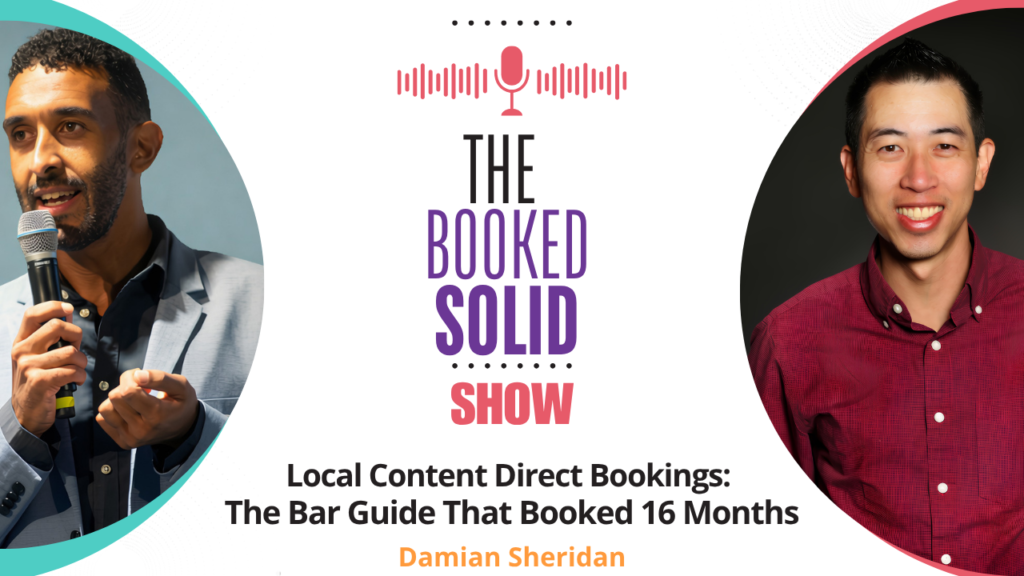
Damian Sheridan spent eight years doing SEO for property managers before he built one of the biggest education brands in short term rentals. He knows the technical side cold. So it says something that his best story about local content direct bookings is a 600 word page about which bars in his Spanish village show football. Nobody would call that a booking strategy. It brought him a guest who stayed 16 months. In this episode of the Booked Solid Show, Gil sits down with the co founder and CEO of Scale to unpack what actually gets properties found now. Gil shares fresh research from roughly 24,000 AI search queries and a finding that surprised him: the sites getting cited had fewer backlinks than the ones that did not. Damian explains why that feels fairer. You will hear how pre arrival guest questions become a content calendar, why the lowest hanging fruit in your business is the email list you already own, and the 30 second video almost nobody records that quietly converts browsers into bookers. Whether you are running two units or two hundred, this one gets specific fast.
Summary and Highlights
👤 About Damian Sheridan
Damian Sheridan is the co founder and CEO of Scale, an educational brand serving the short term rental industry. He started out in 2012 as an SEO consultant working directly with property managers, and spent roughly eight years in that seat. Clients kept asking him for help with Facebook, branding and everything else adjacent to direct bookings. He kept saying no, then pointing them toward people in his network. That pattern became an idea. In late February 2020 he put his own money down on a London venue and ran the first Book Direct Show, about three weeks before international shutdowns. Seven Book Direct shows later, he and co founder Gianpaolo have built Scale into a global events brand with a news outlet and a supplier directory called Connect on the way. Damian now spends most of his time in Spain, where he also hosts.
🍺 A 600 Word Page About Football Bars Booked 16 Months of Nights
Around ten years ago Damian owned a small apartment in a whitewashed Spanish village. He wanted fresh content for the site, so he spent an afternoon walking his town taking notes. Best bars for this. Nearest laundrette. He wrote guides for all of it. One piece ran maybe 600 words on the best bars in town to watch football. Three bars, which games each showed, which leagues. It ranked. Nobody writes that page because nobody believes it produces bookings. Then a traveller searching for somewhere to watch a match landed on his site. He did not book that first trip. He came back later, referenced the page directly, and asked about availability. Across the following three and a half years, that guest stayed roughly 16 months in total. All from one page written laterally. This is the same principle behind long tail SEO for direct bookings and the reason SEO landing pages built around specific guest needs keep outperforming polished homepage copy.
🔗 Mentions Are Quietly Replacing Backlinks
Damian turned the tables mid episode and asked Gil how much backlinks still matter in AI search. Gil had just finished a study running roughly 24,000 simulated traveller queries across Google AI Overviews, ChatGPT, Perplexity, Gemini and Claude. The team scraped the sites that got cited and pulled backlink profiles for both groups. The cited sites averaged 0.8 times the backlinks of the sites that were never surfaced. Fewer links. Still cited. What separated them was content depth and structure, not domain authority. What did correlate was mentions. Not links, mentions. Being named in a PMS roundup, a Reddit thread, a local blog, a comparison post. Reputation, in other words, in a form machines can read. Damian’s reaction was immediate approval. The old link buying era never resembled how brands actually earn trust. If you want the mechanics, how ChatGPT picks vacation rental sources and the GEO framework for vacation rentals both go deeper, and the study on where property managers already win in AI search shows which engines favour independent operators.
📬 The Data You Are Already Sitting On
Ask Damian for the single most overlooked opportunity and he does not say SEO. He says the mountain of guest data most operators collect and then abandon. Email addresses. Phone numbers. Booking dates that quietly tell you it was somebody’s anniversary or a family trip. He is not describing a monthly blast that shouts book now. He means reconnecting. Reach out around the same window next year. Tell them what changed in town. Keep the line open. Gil sees the same pattern in CraftedStays data. Operators clearing 80 percent direct bookings almost always run a system rather than a single tactic. They capture emails at booking, again during the stay, and again on the homepage. Then they nurture. Then they layer SEO and paid traffic on top so the funnel has volume worth nurturing. If that is the gap in your business, start with a repeat bookings email strategy, then work through ten proven vacation rental email marketing strategies and the complete guide to collecting guest emails. Sam Mistretta covered the compounding math on this in his episode on guest retargeting.
👨👩👧👦 Your Inbox Is a Content Calendar Nobody Reads
Here is the idea Gil admitted he had never considered. Guests have been asking you questions for years. Pre arrival messages, mid stay texts, the same three concerns every summer. That archive is keyword research written by your actual customers. Damian’s point is simple. If these people are asking, other people are asking, and almost nobody has published the answer. Gil gave a concrete version from his own cabins. Families booking a place with an indoor pool want to know about pool alarms, locked doors, key codes, whether they need to bring floaties. A parent planning that trip has no idea those safeguards exist. A page answering what to look for when booking a stay with a pool is genuinely useful content only an operator could write. Damian’s apartment saw the same thing with family friendly day trips nearby. Happy kid, happy holiday. That decision starts well before the booking. Both of them landed in the same place: write for who the guest is, not what the amenity list says. That is exactly what shows up in the research on AI search visibility in small markets and why stacking too many filters into long tail content backfires. Craig Webb walked through a similar keyword formula in his episode on niching down.
🏘️ Operators Beat OTAs on Local Ground
Gil’s research surfaced something worth sitting with. Vacation rental operators outranked the OTAs on localised searches. The reason is not technical. Airbnb and Booking.com produce mass market content at scale, but they are not boots on the ground. They do not know which pub welcomes kids at nine at night, or that a Spanish village treats family dining completely differently than a British one. Damian raised that cultural gap himself, and it is the sort of detail no aggregator will ever generate convincingly. Publish it and you own a query the platforms cannot compete for. Damian put it plainly: acknowledge that you are the local expert and lean on it. For the foundations underneath that, SEO for short term rentals across on site, off site and technical is a solid starting checklist, and optimising STR SEO for Google, ChatGPT and AI search covers what changed.
🎥 The 30 Second Video Almost Nobody Records
Damian squeezed one more tactic in at the end and it might be the most immediately usable thing in the episode. Ask your happiest guests for a 30 second video testimonial. Offer a small carrot, a discount next stay or a meal locally. Then embed it on your homepage and property pages. Text reviews have become wallpaper. A real person on a balcony saying they had a brilliant week does not read as wallpaper. Crucially, he says the production should be bad. Phone footage sent over WhatsApp lands as more credible than anything polished. He first shared this from a stage in Spain about four years ago. An operator came back the following year and reported three or four direct bookings from a single property off the back of it. Gil’s reaction was immediate, because almost nobody is doing this, which is precisely why it works. Pair it with the rest of the trust signals that belong on a direct booking site, and with what Amber Knight found about why traffic alone will not fill your calendar. If guests are finding you on an OTA first, the billboard effect explains how to catch them on the way over.
🤖 Inside Scale with AI
The Brighton event started life as a standard one day Scale UK show. Then Damian and Gianpaolo noticed AI was no longer creeping into their speaking submissions, it was dominating them. Rather than let half of every agenda drift the same direction, they carved out a dedicated day at the Brighton Court Exchange. Gil flew from the US for it. What he appreciated most was the arc. Heather Bayer opened with the argument that AI is useless until it understands your business. Sessions layered upward from there. Graham Donoghue of Sykes Holiday Cottages and Forest Holidays closed it out with a look at roughly 150 stitched together AI tools and agents running across one of Europe’s largest operators. Damian was careful to frame that correctly. Nobody should try to emulate it. It is a preview of what becomes accessible to everyone in a few years. Ela’s session on identity fraud provided the counterweight, tracing the progression from forged passports to digital identity theft to entirely fabricated identities booking real properties. A balanced view of AI, as Damian put it, is not optional. The next one runs in London in April, and North American conversations are apparently still live.
🏛️ The Ask Damian Repeats at Every Show
One line comes up at every Scale event: join your local or national association. Regulation is the obstacle he expects the industry to spend the next several years working through, and decisions get made without you if you are not in the room. He is not pessimistic about it. He thinks the case is winnable as long as operators communicate with municipalities using reputable data. But somebody has to show up, and too few do. It is a small investment against a risk that could reshape your business.
⚡ Rapid Fire with Damian Sheridan
📚 A book that inspired you. The Catcher in the Rye. Damian was not a reader as a kid and would have picked football over a book every time. His mum handed him this one around 14 and told him to give it a go. He has read it maybe ten times since. He keeps business books nearby, including Steven Bartlett’s The Diary of a CEO, and cheerfully rated Salinger higher.
🧠 Mindset advice for someone starting something new. Trust your instinct and do not wait. Everyone makes mistakes, including organisations that look composed from the outside while running on panic behind the curtain. Five years ago he would not have touched a podcast interview. Now he launches in without worrying about looking foolish. Do not try to perfect it too early.
🎯 One tactical move to make today. Work the data you already have. Email addresses and phone numbers from past guests, used to keep a real line of communication open so you stay top of mind when they next consider your destination. Then go get those 30 second video testimonials.
🌐 Connect with Damian Sheridan
LinkedIn is his platform of choice, and Scale has migrated to a new home.
Damian Sheridan on LinkedIn
Scale
🚀 Start Building the Content Only You Can Write
Damian’s football bar page took an afternoon. It outperformed years of technical optimisation because it answered a real question from a real person, written by someone who actually lived there. That is the whole lesson. You already hold the local knowledge, the guest questions and the email list. What most operators lack is a site that turns any of it into bookings. CraftedStays is purpose built for short term rental operators who want fast, mobile first, SEO ready direct booking websites without an agency invoice every time they want to test something. Sync your PMS, publish in minutes, and keep iterating as you learn. 👉 Start your free trial at CraftedStays.co and turn your traffic into direct bookings. And if you want more conversations like this one, join the growing community of operators building independent booking brands, swapping what is working and what is not. 🎧 Listen to the full episode with Damian Sheridan on the Booked Solid Show, then browse more strategy on the CraftedStays blog.

Transcription
Damian: We make so many mistakes at Scale. It’s frantic, there’s a lot of panic in the background, but for the most part we come across as this very professional organisation that’s smooth and gets things done. We all make mistakes, and we’re constantly learning. If from day one I’d thought, I need to get this right, I need to learn, I need to be fully prepared, I’d never have done anything. Even doing recordings, podcast interviews. Five years ago I wouldn’t have touched it with a barge pole. Now I just launch in without thinking about what an idiot I might look like, stumbling on stage or stuttering. Just trust yourself.
Gil: Before we bring on our guest, I want to talk about something I’ve been hearing a lot from hosts. I keep hearing the same thing. I know my website isn’t converting, but I can’t afford eight thousand dollars on an agency to rebuild it. Here’s the thing. You’re learning all these marketing strategies, you’re driving traffic, you’re putting it all to work. But if your site isn’t built to convert, you’re basically lighting your energy and your money on fire. And even if you could afford an agency build, every time you want to test something or make a change, you have to pay them again. You can’t iterate, you can’t test, you can’t improve. You don’t need a custom ten thousand dollar website to get the conversion rates that matter. You just need the right platform. That’s why I built CraftedStays. It’s purpose built for short term rentals and designed from the ground up to help you drive more direct bookings. You can finally turn that traffic into bookings, and keep testing and improving as you learn. You make changes on the platform, no new tools to learn. If you need help or want to get started, go to craftedstays.co and start your free trial. Now let’s bring on our guest and get deep into hospitality and marketing.
Gil: Hey folks, welcome back to the Booked Solid Show, the show where we bring in top operators to discuss hospitality operations and direct bookings. On today’s show I have Damian Sheridan with us. He is the founder of Scale, an educational platform. You may have seen his in person events on social media. He brings the brightest minds in the industry together to educate. He also comes from a deep SEO background. Today we get into how to get found in traditional search and in the new chat searches everyone’s been hearing about. We talk about his recent Scale with AI conference and some of the learnings there, and then we get really deep into how to create content that gets found. So without further ado, let’s bring Damian in.
Gil: Hey Damian, welcome to the show.
Damian: Gil, thank you very much. I’m very excited.
Gil: I’m super excited to have you here. We met, what, a few months ago at the Scale with AI conference. My first ever Scale event.
Damian: Hopefully the first of many, Gil. We met in June in Brighton at our Scale with AI conference, and it was great to have you come all that way.
Gil: It was my first time in Brighton specifically, but also my first time in the UK. So I was very happy to fly over for that. It was a really good event. I want you to talk about the impetus behind putting that specific event together, because you did something a little different this time. A full day dedicated to AI. But before we get into that, for folks who don’t know who you are, do you mind introducing yourself?
Damian: Of course. I’m Damian Sheridan, co founder and CEO of Scale, an educational brand in the short term rental industry. For many years, from about 2012, I was an SEO consultant working for myself with property managers in the short term rental industry. I did that for about seven years. When clients asked if I could help with Facebook, with branding, with all kinds of things related to direct bookings, I’d put my hands up and say, nope, I can’t do that, I’m not the right person for you, that’s not my skill set. However, I do know a few people. I’d built up a network of connections by then, and it got me thinking. Is there an opportunity here to bring people together on a platform, in a Facebook group, maybe even an event, where we bring everyone under one roof and answer everyone’s questions? That led to the first Book Direct Show. I put some money down on a venue in London in 2020, weeks before international shutdowns. About two weeks beforehand, actually.
Gil: But you were able to do it, right?
Damian: We were, yeah. The event was the very end of February 2020, and everything shut down about three weeks later. So that was interesting, to say the least. But we did it. I say we, I did it. It was all myself, before I had a team or anything like that. It was really great. It was all themed on direct bookings. We had people speak about social media, branding, local partners. Ways to reduce reliance on OTAs. And it made me think there’s a real hunger and appetite here for people to retain control over their own business and not have to rely one hundred percent on some of these big platforms that we love and hate. That was the first of several Book Direct shows. We’ve had seven now. Alongside that I co founded a brand called Scale, also primarily events and conferences, but we’ve got a few projects bubbling that are coming to the surface very soon. We’ve got a news outlet and a supplier directory coming out called Connect, and various other things. So that’s me, co founder of Scale.
Gil: I’m trying to follow the mission here. It’s a lot around education. How do you educate and bring people together? One channel you’ve used so far is conferences and events. But it sounds like because the mission is bigger than that, it’s not just going to be events. There are other pieces you’re trying to fit together into an entire ecosystem. Let me know if I’m reading too far into it.
Damian: Absolutely right. Education is at the core of what we do at Scale, one hundred percent. For eight years I worked in SEO. That was my thing. SEO is one of those topics where if I start explaining the technical side, you see eyes glazing over. Nobody’s interested. It’s not a sexy topic at all. But there are far sexier topics in our industry, and once we started bringing those together in the Book Direct Show and Scale, it made it fun, it made it interesting. I think it brings people out of themselves to really think, wow, I never thought of that. All these different takeaways from parts of your business you might assume are dull. Revenue, oh, it’s just getting more bookings. Well, no. I’ve seen the evolution of dynamic pricing over the years, from people just dipping their toes in to now, who would live without it? These things evolve over time for property managers, and we try to have them at the core of our events. Like AI, which I’m sure we’ll talk about. And we make sure those trending topics are tangible and actionable. That’s really important. We try to make sure these things are attainable for property managers and not too intimidating, not too scary.
Gil: That’s an interesting line. You talk about SEO, and I think we’re seeing the same thing with AEO and GEO. These are not the sexiest topics, and I agree that once you get into the mechanics it becomes overwhelming. Especially now with AEO and GEO, where there’s a lot of volatility and not many frameworks yet. With SEO you can at least talk about on page and off page, and people generally know what that means, at least people in the space. But if you talk to anyone who isn’t a marketer, these are deep topics that are hard to grasp. So how do you bridge that gap? Are you more focused on the benefits and why people should pay attention? Or do you try to educate on the tactical things they can do without going too deep on the technical side? How do you educate on something so technical?
Damian: It depends on whether people want to be educated, for a start. In terms of SEO and GEO, most property managers have a brand of some sort. That’s fundamental. Do we want our brand to be found by potential guests? Of course we do. It’s just that way of thinking. I need to be found, how am I going to do that? OTAs are a great place to distribute your inventory and be found, but beyond that, how are we going to do this? We need to be out there, and it’s not just a case of having a website and throwing it out there. We know that doesn’t work. So I think it’s about talking about discoverability. And look, it’s totally changed. With SEO there were more structured mechanics that made sense. They were annoying and quite monotonous sometimes. From the days where you could whack a load of search terms on one page in a certain colour, Google and search engines have become a lot more sophisticated. But with things like backlinks and structured data, once you had a checklist per page it usually made sense that you’d start to rank. Then with decent research into your competitors, you could get onto the first page of Google, start ranking in those first three positions, and start to see results. Enquiries and bookings. So it’s about getting into the mindset of the property manager. What do you want? You want bookings. How are you going to get those? You need your business and your listings branded, and you need those pages and that data out there in a way that means people organically find you.
Gil: That makes sense. What you’re leaning on is exposing that there’s an opportunity, and this is how you approach it. You mentioned it’s almost like a checklist at the beginning, making sure from a hygiene standpoint they’re doing these things, doing the research, doing the competitive work. It’s like peeling back the onion in terms of maturity, and you’re guiding them through it. That’s really interesting. And I like how you wove that in. You knew SEO was a challenging topic, so if you wanted people interested in it, you also had to include all the other parts of marketing.
Damian: SEO is not the fun stuff, especially not the technical side. Expecting my clients to understand the value of backlinks from other sites, even explaining what a backlink is, and why one backlink is more important than another, why search engines like Google value them so much. It’s not easy. It has changed somewhat, and I might pass that question on to you, Gil, because I see your posts regularly about GEO and the value of backlinks. I’m dabbling a little, watching videos, seeing what makes a brand rank on ChatGPT, on Claude. But if I can turn the tables on you for once, Gil, I’d love to know. One of the most difficult things is backlinks. How valuable is that now in your eyes in terms of GEO?
Gil: Maybe to prime that for listeners who don’t know what a backlink is. A backlink is basically another website directing their traffic or linking over to your website. This is the search engine’s way of knowing who’s talking to who, who’s referencing who, and it ultimately builds authority. Damian, you mentioned not all backlinks are the same. There are backlinks from very authoritative sources that you should trust, and when they send traffic they help you. But there are also toxic ones, where they’re wasted and could even hurt you. So make sure you’re not buying backlinks. There was a wave of people buying backlinks because, oh, you need backlinks, I can get you thousands at a time. That nasty tactic worked for a short while, but in the long run it hurt. All that to say, backlinks are a critical strategy on the SEO side. We started looking into this on the GEO and AEO side, trying to figure out whether backlinks matter as much when someone is using ChatGPT, or using Google and seeing the AI overviews at the top. And we actually found that they do not. Surprisingly. It does not matter as much. When we ran the research over the last five or six weeks, we did about twenty four, twenty five thousand queries. Going out there and simulating what a user would do. Best places to stay for this. We also did top of funnel searches like things to do in this area. We tried to figure out which property managers were ranking there. When we found a property manager who ranked, we scraped their website and asked, okay, what are they doing differently that helps them rank? We looked at the metadata. Are they using JSON LD? All the hygiene stuff. Page performance, page speeds. Then we went back and spent a lot of credits figuring out, of the property managers who ranked and didn’t rank, what does their backlink profile look like? How many backlinks do they actually have? We found that across the board for many of the chat engines, and we did Google AI Overviews, Perplexity, Gemini, ChatGPT and Claude, the sites that got cited had on average 0.8 times the backlinks of a site that did not get cited. So they actually had fewer backlinks, and they still ranked. That’s very surprising to me. The ones that ranked typically had much richer content. It was all about the content and how they structured it, and less about the site authority stuff we’ve spent so much time on. A lot of that didn’t matter as much, which is surprising because if you think about how AEO and GEO work, it’s basically running a Google or Bing query underneath. So you’d think that to rank on ChatGPT, you first need to show up on Google. That’s the hypothesis. And it’s surprising that it’s not always true, because the queries ChatGPT, Perplexity and Claude send to the search engines are very, very specific. Yes, you do need to show up there, but you don’t need to be on page one to be cited. So that was surprising. I don’t know if you expected that, or something different.
Damian: I did expect that, yes. I was fully aware that mentions across the internet are of equal importance, across various reference points.
Gil: You just mentioned something very interesting, and sorry to our listeners, Damian and I are going to geek out for a bit. Let us have this moment. Mentions are different from backlinks. A backlink is them linking to your website, and it’s easily traceable. But when a PMS offers direct booking websites and they name you without linking you, or people talk about you on Reddit, that’s different. We found that the property managers who do well are actually named across the web. They don’t necessarily have to be cited. So what consumers say about you, not just a link from one blog post to another the way B2B works, that matters now. There are also shifts happening with Reddit. These past few weeks, Reddit is no longer one of the cited sources for ChatGPT. So if you’ve been harnessing Reddit for a long while, that’s going to matter a little less and things will shift around. I bet that’s not the last we hear about it. But the point is that the reputation of a brand matters so much now.
Damian: Yeah, absolutely. That organically should be the way anyway. For all those years when we tried to create links, buy links, whatever the strategy was to get backlinks from other sites, we became obsessed with it as SEOs, and it just wasn’t a natural way to build a brand. So for me, this is actually a much fairer way to get your brand cited and developing in a way that’s all about reputation, as you say. I’m all in favour of it.
Gil: I’d love to go back to the SEO side of things. We could spend more time on AEO and GEO, but I want to reflect on some of what you’ve seen over the seven years doing SEO for larger property managers. What did you find yourself tackling for every property manager? You mentioned a checklist earlier. What should a property manager keep in mind, whether or not they’re hiring an agency or doing it themselves? What are the low hanging fruits that seem obvious but people don’t look at?
Damian: Are we talking about generating direct bookings, or SEO specifically?
Gil: How do you think about the nuanced difference between the two? Ultimately this is all to generate more bookings, but maybe there’s a cut of it that’s slightly different for you.
Damian: I think SEO is one topic that, as I said, isn’t the most fun in the world, and there are checklists of things people can do for on page SEO. I won’t get into that right now. But one thing I find extraordinary that still exists is that people sit on a mountain of data. That data can be email addresses, phone numbers, anything you’ve collected at the time of booking, or perhaps haven’t if your bookings came through OTAs. And they do nothing with it. No email marketing campaign, no reconnecting with those people. What I mean is not necessarily sending emails every month going book here, book, book your holidays. It’s just reconnecting. If you’re collecting data and you know it was somebody’s birthday, anniversary, family trip, connect with them at the same time of year next year. These are quite simple things that build rapport with your previous guests. That’s possibly the lowest hanging fruit for me in terms of getting repeat bookings, and not losing that fifteen to twenty percent on commission or accrued fees across third party platforms.
Gil: You mentioned something I’m starting to discover. At CraftedStays we have a pretty wide range of customers. Some with six to twelve doors, and property managers with a hundred plus. We’ve seen some smaller property managers with really well operating systems. The one thing I’ve seen is that the folks who get eighty plus percent direct bookings typically have a system in play. They invest in many different things. They invest in email collection at booking time, or during the stay. They invest in capturing emails on their homepage. And they invest in SEO. So they layer these things. It’s not always linear, like you have to do this then this. I do think targeting your past guests is probably the lowest hanging fruit that everyone should be doing, and then creating that nurture email campaign. I know this topic is really about SEO, but email is one of those fundamental things every business should have, not just vacation rental businesses. If you have their emails you can do amazing things. You can reach out to them. If you have their phone numbers you can text them. You can run retargeting campaigns, send them ads, do one on one connections. So fundamentally that’s a core. But when you layer in a sequence that goes out, you’ve captured someone’s email, you’re sending them something once a month about all the great things, and every once in a while a discount code, it’s really about adding value. Businesses that consistently add value are nurturing the leads they have. When that person thinks, maybe I should take a vacation, or I’m thinking about new software, that’s when things hit. But you have to stay top of mind, and it’s about the long game. Then you start layering SEO, layering ads, building a bigger top of funnel. More people looking at your website. Now if you have that sequence in place, you amplify things quite a bit. Over time that’s what I’ve learned, even growing CraftedStays and our own marketing. It’s not one thing that gets you to that success rate. It’s a culmination of all these things together.
Damian: I’m going to bring it back one phase, more to the SEO side and content. You’ll know that in Europe, football is the biggest sport. Soccer, for our American friends.
Gil: Thank you for the translation.
Damian: It must have been ten years or so ago. I was thinking about content for my website. A small apartment in a whitewashed Spanish village. Thinking, how can I gain expertise, authority and trustworthiness on my site, as any SEO is always thinking. How can I build up content that’s fresh and interesting? So I went round my local town and just walked for several hours, looking around, going, okay, what are the best bars for this, where’s the nearest laundrette? Just gathering information as I went, with a view to writing about it. Which I did. Numerous guides to where to do this, the best whatever for that. One of the things I wrote was very small, maybe only five or six hundred words. A small piece on the best bars to watch football in such and such a town. There were only three bars or so, but I wrote a piece with each of those bars listed, what games they show, which leagues. And that page ranked so well for that particular phrase. Now, that’s not something many people would write about, because they’re not thinking, I’m going to get a booking from this. It’s not a logical step in the eyes of many property managers to think that’s going to bring in the punters. But it brought me someone who didn’t book at first. When they came, they were looking for that particular phrase. They needed a place to watch a game. The next time they came, they came to my site and said, hey, I came across your site through this query, have you got availability? Yes, I do. Over the coming three and a half years, they stayed about a year and four months in total. And that was all off the back of one piece I wrote, just trying to think laterally about something relevant to my little village. It may not be what’s right in front of you. It’s thinking laterally beyond that.
Gil: I think that’s so important now, and so relevant. We talk about SEO being the cousin to AEO and GEO. This is probably the biggest blood tie between them. When you’re creating content and making it valuable, that’s what gets surfaced. Because if you think about the search engines and the AI chats, they’re there to serve the person asking the question, and they want to feed them the best answers possible. So if you obsess over that, over who’s staying at my places, why are they coming here, where are they coming from, what does that journey look like, what are they thinking about throughout it, and you answer the questions that come through their minds and that they could be typing on a keyboard, that’s where you start to rank. With AEO and GEO the queries are much more refined now. They factor in many different things. Whereas in the past with SEO, you didn’t have to think so deeply about the avatar. Now, when you’re writing articles, you almost want to imagine the person staying there. They have two kids, they have a dog. That specific avatar, because very likely you’re giving that information to ChatGPT when you’re planning a trip. I’m planning a trip, we’re bringing two kids, we have our dog, we’re thinking about this itinerary. How would you revise it? Help me plan out my days. Okay, now I’m looking at where to stay, what location should I be in? So you can imagine the chat thread you’re having with ChatGPT or whatever chat you use. It has all this information, so when you ask where should I stay, it’s going out and finding not just where someone should stay in this area, but taking in all those little nuggets like pet friendly and family friendly. So the content you should be answering for needs to be more niche than it has ever been before.
Damian: For sure, exactly. And I would include pet friendly, with a pool, with air conditioning. Accessible. The small things you may never think of. There are so many. I’d add to your point that, as I said earlier, we’re all sitting on data we’re not even aware of. With the advent of AI chatbots, or whatever technology one is using, people have asked us questions over the years about our location and our property, and we don’t stop to revisit that and think, hang on, if these people are asking these questions, other people are asking them too. Let’s get some content out there so we’re organically found for that question. So again, it’s thinking in a different way. Not trying to rank for, I don’t know, a villa in Miami, when for the most part you’re never going to compete with the OTAs or massive third party booking platforms. But thinking creatively, you can actually beat them ninety percent of the time with all of these longer tail keyword phrases.
Gil: That’s so interesting. I’ve never thought about using pre arrival questions as an input to your research, but it makes a lot of sense. If you can get the API keys, or connect to your PMS and pull in all those messages, maybe the last six months, and see what types of questions people are asking. I’m pretty sure Claude, for instance, can comb through thousands of conversations and pull out six different trends. Some of the things we get asked all the time, we have properties with pools, and people are thinking, what do I need to bring when the property has an indoor pool? Do I need to bring my own toys? Do I need floaties? Do you have pool alarms? Are the doors locked? Those are very common questions, typically because we cater to younger families, families with kids in infancy. One of their concerns is, oh great, there’s an indoor pool inside the cabin, but what happens if my kid goes down the stairs and decides to take a dip in the middle of the night, or play around the pool? We don’t want them to ever get access to it. We have security measures in place. A pool alarm, the doors are locked, there’s a key code. But someone planning a trip doesn’t know those things are available. So if you can create content like, things to look out for when you’re shopping for a place to stay with a pool, what should you consider? That’s actually valuable content you have firsthand experience answering, especially if you’re a property manager who obsesses over those things.
Damian: Yes. The apartment I referred to earlier, we hosted a lot of families during the summer. Again, family friendly day trips nearby is one of those things most people wouldn’t go out of their way to publish content on, and it was so popular, because that’s what people want. You and I probably know from having young kids, if your kid is happy, you’re happy on holiday. You almost focus your whole trip around the happiness of your child. That becomes a hugely important part of the stay. And quite often that starts before the actual booking takes place. So I want to be right there at the point where people think, wow, that’s great information, let’s check out these guys, possibly to book on their site. We should all be thinking about that. Not just who our avatar is, and getting our wording right on the site to say, perfect for families, perfect for couples. No, actually say what the things for families in our local area are. In Spain, where I spend most of my time now, it’s a very family conscious destination. It’s all about the family. Whereas when I go back to the UK with my kids, at nine o’clock you’re not allowed into a pub with them, which is crazy. That defies logic to me. But it’s a cultural difference, and it’s really important we get those cultural differences out there and say, hey, my town is a really family friendly place. This restaurant, they’re going to love you. This water slide park, they’re going to love you. Just get the experience right for them so they think, wow, this is the brand I want to stay with.
Gil: I think from our research, taking it back to the data, we found that vacation rental operators outranked even the OTAs on these types of searches. Because if you think about the content the OTAs create, it’s a lot more mass market. They don’t have the time, energy or resources to create localised content, much less the knowledge. They’re not boots on the ground knowing these pubs. And yes, maybe they can scour the web and put AI pages together, but that intimacy of knowing the guests and the things they think about isn’t there. I’m sure Airbnb has a wealth of knowledge and could gamify it if they wanted to. They can totally read our messages and use that. But all to say, vacation rental operators have an unfair advantage in localised knowledge. The property managers who are boots on the ground know their market very well and can really empathise with their ideal avatar. Those are the ones who are going to kill it, at least the way I see it in the data we have.
Damian: It’s really important for us to acknowledge that we are the local experts, and lean in on that data and that knowledge we have. So important.
Gil: Damian, we went full deep into all the different strategies of AEO, GEO and SEO. I want to bring it back to Scale. You put phenomenal events together. You brought me all the way to Brighton, and that’s quite a far trip, which speaks to the quality of the content. Talk to me about Brighton specifically, and what you did differently this time with a full day of AI, and why you thought it was important to spotlight that.
Damian: Originally the Brighton event was going to be a one day event. Our Scale UK day, taking place in Brighton. Around October or November of last year we thought, actually no, this goes back further. About a year and a half prior, even in 2024, AI was not just creeping into our speaking submissions and content. It was starting to dominate, to the point that we thought in mid 2025, we possibly need to dedicate something to this, because we can’t have all our shows being fifty percent AI content. So it was on the back burner for a while, and then myself and Gianpaolo, my co founder, were in Barcelona at a different trade fair event. We thought, come on, let’s do it. We should do a one off Scale with AI event. Full day, all about AI. That was really it. It’s such a huge topic. It has so much more interest than the traditional topics we’ve always had, like direct bookings, revenue management, profitability. Those are consistently of interest to our attendees, because we always ask beforehand. But AI is on another level in terms of how it’s piqued everybody’s interest. So we thought, it’s worth a go, let’s do a one off day dedicated to it. At the time we wondered, is this the first event related to short term rentals and AI? We’re pretty sure it is. And thank you for coming. We did our first one in Brighton at the Brighton Corn Exchange, and it was great. We had phenomenal speakers from the US, from Canada, from all around Europe. It was an interesting group of people because of the attendees. Some had very little knowledge and ability, and it’s important for them to be upfront about that, so we try to have different sessions according to different levels of experience. Some highly experienced. You’ll have seen Graham Donoghue’s session at the very end, which was a mind blower. I think we had a little bit for everyone. So of all the topics that need a dedicated event, it’s AI. We do workshops and masterclasses around revenue management. We have the Book Direct Show. But this was something worthy of a whole day in itself, and we’re really glad we did it. It’s something we’re going to carry on with. We’ve got one in London next April, which we might get you along to.
Gil: I know there have been folks lobbying you, and lobbying is probably the most accurate word, to come to North America.
Damian: Yes, those conversations are still going on.
Gil: I should join the committee and try to lobby too. But I definitely look forward to the London event in April when you do it again. I enjoyed it a lot. I get really deep into AI. We use it in our business quite a bit. We have lots of AI incorporated throughout our app and platform. But it was really good to see two things. One, from a content perspective, you’re right, there was a really wide range of content, so no matter your maturity level you could get good nuggets out of it. I liked that you started with Heather Bayer, really talking about how, in order for you to use AI effectively, it has to know your business. Then layering in, okay, if you’re going to use AI in social media, how should you think about it? With each session, and I don’t know if you did this intentionally or it was serendipitous, it was almost like building the day up towards maturity. And then you ended with Graham. You closed out the show with, okay, you’ve learned all these things, what happens if you turn the knob over and over again and amplify it? What could that look like? For anyone who didn’t get to see Graham’s talk, this guy uses AI to run so much of his business. He mentioned about a hundred and fifty AI tools stitched together, agents that run, multiple models, local models. He’s in another world. And that talk wasn’t necessarily about how do we emulate Graham’s practices. It gives you a glimpse into what we can expect over the coming years in terms of accessibility. I see Graham automating so much and having his systems tied together, and as AI matures, that accessibility and power gets pushed down, where consumers with far less technical know how now have access to this wealth of information, automation and productivity. That’s what I really liked about Graham’s session more than anything else.
Damian: It was quite a crescendo, all right. It’s important to say that Sykes Holiday Cottages and Forest Holidays, where Graham is, is one of the biggest short term rental companies in the world, certainly in Europe, with many thousands of properties. So for the most part it’s not something the average property manager should seek to emulate at all. But it’s almost a vision of the future and what’s doable. Even Graham would say that if he speaks again next April, it’s going to be a totally different talk. The capabilities and potential out there are phenomenal. But alongside that, you probably saw Ela’s talk as well, Gil.
Gil: Yeah, on trust.
Damian: There is negativity out there as well, and I think we need a balanced view of AI. It’s not necessarily all a bed of roses. We need to be aware of the things that may not go right, the things around authenticity and fraud that come with AI. It’s important to expose that too, so we’re aware of the negative side.
Gil: That was an interesting topic. If I remember correctly, she had three stages of fraud. In the very beginning it was physical, replicating someone’s driver’s licence or passport. Then you get into digital fraud, identity theft. And now there’s a new fraud where they’re not assuming the identity of another human, they’re creating a new identity altogether, and then possibly renting out a place that isn’t intended for them. It’s a ghost, almost. So it’s very interesting to see what her company is set out to understand at a much more intimate level, and how they help operators battle against it. Overall it was very well rounded. One thing I always struggle with is that with any event, there are multiple sessions happening at the same time, and you think, I want to attend this one, but I also want to attend that one. There’s no way to combat that other than making your event three times longer than it is. Or replays.
Damian: We did actually, and we need to get the videos out. We recorded many of these, so maybe we’ll include some of them in the show notes for this. We do have access to the recordings. Some of them are amazing. We are unapologetic in our content in terms of having two tracks. We tell people to bring their team so they can get the most out of it, but we also get so many applications to speak, the AI event especially, so it’s very hard to condense them into one track where everybody’s sitting facing the same stage. So we like to mix it up. Yes, some people won’t see some sessions. And I know in the US sometimes they’ve got six tracks at any one time, so that, to me as an event organiser.
Gil: That’s an ongoing thing with any good conference. Any good conference is going to have so much material packed into two or three days, or even one day, that you’re going to have to make choices. And if you’re really invested, you’re going to have to watch the replays to catch up. I think that’s ultimately the only way you can be in two places at the same time. Hopefully you catch the session you really wanted to attend. Sometimes it’s hard to get into some rooms. Even at Scale there were times when it was just too big a crowd for the room.
Damian: There were a couple. It’s really hard to gauge in advance which sessions will be more popular. We learn with each one we do. But with AI we weren’t sure, and one stage was bigger than the other, as you know, so it was a case of, who’s going to speak where, what’s the audience going to be? For the most part I think we got it right, but a couple of sessions were busier than expected. That’s part of learning as an event organiser.
Gil: As you think about Scale and the overall brand around education, you mentioned some of the things you’re investing in now, like Connect, being able to connect everybody together. As you fast forward three years, what do you imagine Scale offering to the industry, and how do you think you’re putting your stamp on the world?
Damian: Without giving away too much, we’re going to create a whole new ecosystem for property managers and hosts to experience tools, connect with each other, and learn about what’s happening in the industry at large. All in one platform, one ecosystem. That’s something we expect to be in operation probably early next year, and something we really want to develop globally. So watch this space.
Gil: I heard globally. So North America is definitely included in that.
Damian: Yeah. Can’t get away from that, Gil.
Gil: I always love learning about different industries and seeing the progression. I come from an ecommerce background, so I take a lot of inspiration from ecommerce and commerce in general, because they’re so far ahead of us and there’s so much energy poured into it. I’m interested in your side of the world. As you’re thinking about education and platforms and building this out, are there other industries or niches where you’ve found, oh, they tackled it really well, and you’re inspired by their approach? Or is this more, I have this vision planted in my head and I’m slowly chipping away at it? Or a combination of both?
Damian: I think maybe the most logical comparison we have to another industry is the hotel industry. The hotel industry is unquestionably more sophisticated than our vacation rental and short term rental industry. We’re very fragmented, and we don’t have set standards in place. So it’s a little more difficult for us as property managers. That said, I find that the exciting nature of our industry. We’re still, whilst we’re not alternative accommodation anymore, in our infancy, and that really excites me. So whilst we might not be as traditionally sophisticated in certain terms, I wouldn’t change it for the world. I think regulation is a big obstacle we have to overcome over the next couple of years. But so long as we can communicate effectively with governments, local governments and municipalities, that we’re not only here to stay but we need to work with them to base decisions on proper reputable data, I think we’ll overcome this obstacle. I think the future’s really bright for our industry. So not necessarily comparing to any others. I think we’ve got a great industry, and one I’m excited to be in.
Gil: I get this comparison every now and then, and I think you’re absolutely right. The hotel industry has so much structure, systems and processes, and in many ways an ecosystem that’s already in play and has been for decades. I’ve talked to other folks looking into short term rentals and they’re like, whoa, you guys are moving so fast on the short term rental side. Take guest messaging. If you’re inclined to do so, you can connect three, four, five different automated messaging tools that understand your SOPs and your properties. They can help you answer questions really rapidly, and that’s a good experience. I’m seeing that much more widely adopted on the short term rental side. Hotels are almost afraid to input that into their ecosystem. They’re still very human, a lot slower moving. If you look at the PMS space, and what has changed over the last three years in terms of maturity and what they’re incorporating, then look at the hotel side, oh my gosh. Totally different worlds. Yes, we’re both doing accommodations, but the infrastructure behind it is very different. So we do have the advantage of speed and learning quickly, which is so important now when things change so fast. And the inverse is that hotels right now, at least from the outside, are trying to figure out how to shift into that position, and shift fast enough that they’re not left behind. So they have a slightly different problem in this volatile state.
Damian: Yeah. But as you say, we have something in our favour in that we can move quickly as property managers. We can adopt things without going through different siloed departments, and we have ownership of our brand. That’s the great thing about our industry. There’s an innocence almost, that can work in our favour.
Gil: I think that goes to your mission. The educational side and bringing people together is probably more important than even the hotel comparison, because we’re all trying to learn from each other. We’re trying to set standards. We’re all trying to band together. The point you made about regulation is a very important one that I don’t think enough folks are involved in. But as the industry matures, it can’t be ignored.
Damian: Something we mention at all of our shows is, join your local or your national association. It’s so important not to leave it up to others to fight or advocate on your behalf. Unless you’re involved, unless you put a little investment behind it, decisions are taken outside of our control.
Gil: Damian, it’s been a huge pleasure having you on the show. Being able to geek out on some of the technical stuff, so I apologise to our listeners if we went too deep, but Damian, I appreciate you entertaining me a little and letting me stretch my neurons. It’s also good to hear the fundamentals of what it really boils down to, which is creating good content that’s valuable to people. If you do nothing else in terms of AEO and SEO and all that, just get really good at understanding who you’re trying to serve, and answer their questions in an authentic way. You might be surprised. You might actually rank pretty highly without worrying about the technical stuff. That’s a huge takeaway from today’s conversation. And also getting to know you, and why you started Scale, and why it’s important to you, and where you’re taking things. I’m really glad I took that trip to Brighton. Thank you John, if you’re listening, for getting me a ticket out there and making sure I attended. I really enjoyed it. So I hope I get to see you next year, and see some of our listeners at the show as well. With that, we usually end the show with three questions. First one. What’s a book that has inspired you, your career, your life?
Damian: Inspired my life. I was not a big reader at school as a kid. If I could get away with not reading books, I would. I’d be out playing football. So the first book that actually resonated with me was The Catcher in the Rye. It was a book my mum gave me when I was about fourteen or fifteen. She said, just give it a go, I think you’ll like it. And my goodness, I must have read it ten times since. I love that book. The innocence of youth, and just the development of a person, in both negative and positive ways, is a wonderful story. That always stands out for me as a favourite. It may not have inspired everything I’ve done, but it’s a wonderful publication.
Gil: I really like that, because typically we get non fiction books here, the more mindset books. But you answered so authentically, just knowing that book had such a big influence on you.
Damian: I should say I do read books like The Diary of a CEO, and others around me here, which are inspiring in a way. But I bring it back to something that actually just hit me. It wasn’t how to do something. It was just, wow, that’s maybe something all of us have. We’ve all got innocence in us, and that was great. So that’s it.
Gil: I didn’t know Steven Bartlett had a book, The Diary of a CEO. Is it any good?
Damian: It is, yeah. The Catcher in the Rye is better. It is good though. Next time I see you I’ll give you a copy. I’ll give you a copy in London in April. How about that?
Gil: All right. Then I have to fly out there for that.
Damian: There you go.
Gil: Second question, Damian. What’s one piece of mindset advice you’d give to someone starting something completely new?
Damian: Just trust your instinct. Don’t wait. Just go, because we’re all going to make mistakes. My goodness, we make so many mistakes at Scale. It’s frantic, there’s a lot of panic in the background. But for the most part we come across as this very professional organisation that’s smooth and gets things done. We all make mistakes and we’re constantly learning. If I had thought from day one, oh, I need to get this right, I need to learn, I need to be fully prepared, I would never have done anything. Even doing recordings, podcast interviews. Five years ago I wouldn’t have touched it with a barge pole. Now I just launch in without thinking about what an idiot I might look like. Stumbling on stage, stuttering. Just trust yourself. For the most part, as long as you have a passion inside you, people will take to you and engage with you. So that would be it. Trust your instinct and go for it. Don’t try to perfect it too early.
Gil: With how polished social media is nowadays, I think people are yearning for that authenticity. Making mistakes and owning up to them, leaning into it, saying okay, I learned this, and sharing those. I find those very inspiring. It adds a human aspect. Especially as a founder, when I look at other founders, I really enjoy the learning posts. Out of all the posts they could share, the ones where they’re sharing humility, where they say I tried this and it didn’t work, or we failed this way because I dropped the ball. Those are the ones I really empathise with. If I think about the first version of CraftedStays, back in October of 2023, I created the first version. I learned React, I learned Next.js, I learned all these new coding languages, and I tried to build the first version. It stunk. But I shared it around with my mastermind peers and they were like, whoa, this is amazing. Coming from the software world, I felt it didn’t meet the bar. But when I shared it out there I got really good feedback that I should lean in more. That eventually led me to hire engineers to build it out correctly and scale it. If I’d felt I had to make it perfect and hadn’t shared it imperfectly, I wouldn’t be where I am today. I wouldn’t have accomplished the things I did. So I completely agree. You need to trust your instinct, you have to have that passion, and you have to be okay with mistakes and owning them.
Damian: When it’s our own project we become so involved that we can’t see the wood for the trees. Sometimes you just have to think, just go for it, just launch. Almost fingers crossed. That would be my main advice.
Gil: Last question, Damian. We talked about different strategies, AEO and SEO. We talked about foundations like investing in email marketing. What’s one tactical takeaway you want our listeners to put into practice today? Something tangible they don’t have to invest months into. Something they can do today that either helps them get started in direct bookings or amplify them.
Damian: Repeat bookings, which we mentioned earlier, is probably the easiest thing. Work the data you already have. Those email addresses are key. Email addresses and phone numbers, if you’ve collected them. Hopefully you have collected at least that basic information and not lost all of it through OTAs not giving it to you. And just communicate. Keep that line of communication open with all of those guests, because that’s how you build the rapport. As long as you’re top of mind, if they’re going to consider coming back to your destination, be there. Let them remember your name. Let them know where the nearest place is to watch football in your local town.
Gil: That’s so important. A lot of folks think they need a really mature system, they have to build this elaborate direct booking machine. But no. If you start on the foundation, and email marketing is one of the biggest foundational pieces, if you invest in that and actually nurture it, don’t just collect the emails but make sure you’re sending emails out. There are effective ways. You can build sequences. But if you just nurture that, you’re far ahead of so many other folks. Imagine a guest stays with you, they had a great time, and hopefully our listeners are investing in really great stays. If you deliver that great stay, and you deliver high value content that keeps you top of mind, all the great things to do in your area, all the places they might have missed, you bet the next time they’re thinking about staying somewhere, where are they going to go? They’re going to trust you because you built that rapport. And hopefully you have the right email. If you have annual visitors and your booking window is three months, then in month nine you should send them some sort of care to say, hey, if you’re thinking about coming back, here’s five percent off, here’s ten percent off. You don’t have to pepper them with discount emails. Just place it strategically. But that only happens if you know your customers really well.
Damian: On that, I’m going to give you one more if we still have time, Gil. One more quick thing everybody can do. Nobody does this. Get video testimonials from your loyal guests. People who are enjoying themselves. Give them a little carrot of some sort. A discount next time round, or a free meal somewhere, whatever it may be. Ask them, will you give us a quick video, thirty seconds from the property, saying how much you enjoyed your stay? That in itself is so much more effective than a text review. And if you can embed it into your website, I don’t know if it’s possible with CraftedStays, but even YouTube. A YouTube video embedded into your site from somebody who’s been in your property. They may be on the balcony overlooking the sea, or whatever it might be. That on your website homepage, on your listing pages, will one hundred percent drive more interest and direct bookings to your site.
Gil: Wow, that’s a golden nugget. I haven’t seen anyone invest the time and energy to do something like that. And I can imagine, because no one’s doing it, that standard hasn’t been set. If you’re the one who has it, what an impact that would make.
Damian: I’ve said this a few times on stage. I think I first said it at an event in Spain about four years ago. Somebody came back to me the next year and said, we did this, and we got about three or four direct bookings off the back of it, off one property. So it does work. It resonates much more with people when they can see somebody. And it’s really important to say, it doesn’t need to be a professional recording. It can just be something on their phone sent through WhatsApp. In actual fact it looks even more authentic when it’s a poor production. The sound does not have to be good. It’s just real. Just be aware of that. A real thirty second video of somebody saying what a great time they’ve had here. It’s really effective.
Gil: I love that. Damian, thanks again for coming on the show and dropping so many nuggets of good information. I’m excited to see you next in April, and hopefully we get to chat here and there as well. Again, thank you for coming on the show. If folks want to get in touch with you and learn more about the events you’re putting together, where can they keep up with you?
Damian: With myself on LinkedIn, that’s my social media platform of choice. It’s Damian, D A M I A N, Sheridan. And Scale. We’ve migrated to a new domain actually. It’s scale-rentals.com. So either of those two places, hit me up.
Gil: Awesome. I’ll be sure to include those in the show notes. Again, Damian, huge pleasure to have you on, and until next time. Talk to you later.
Damian: Thank you very much, Gil.
Gil: Bye.
Damian: Bye bye.
