CraftedStays - Book Direct Day 2025.
CraftedStays Blog Posts

BOOK DIRECT Day 2025

Book Direct Day, celebrated annually on the first Wednesday of February, is a global movement aimed at encouraging travelers to book directly with property managers, owners, and hosts. The goal is to highlight the many benefits of bypassing third-party booking platforms, not just for guests, but for property managers as well. When guests choose to book directly, they save money, gain access to exclusive perks, and enjoy a more customized experience. For property managers, this means keeping a larger share of their revenue rather than paying hefty fees to online travel agencies (OTAs). Book Direct Day is the perfect opportunity for you to showcase your properties, engage with your audience, and boost direct bookings—empowering you to take control of your business without relying on third-party platforms. Feel free to send us an email at hello@craftedstays.co if you need help along your journey of direct bookings. Why would you want to go Direct? How to make the most out of Direct Booking Day? If you’re interested in more tips on how to drive more bookings by targeting past guests and other tactics, download our free ebook. HAPPY BOOK DIRECT DAY! 💜 Start crafting personalized sequences and impactful broadcasts today to enhance guest experiences and boost your vacation home rental property’s success. Send customers directly to your own direct booking site rather than the OTA when crafting these emails. 

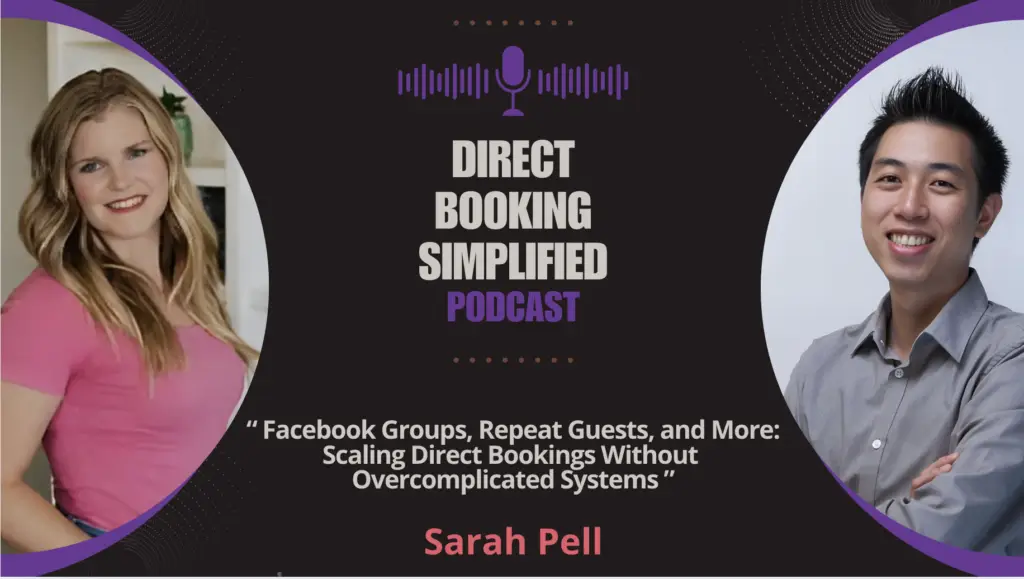
Direct Booking Simplified Podcast featuring Sarah Pell
Booked Solid Podcast

Facebook Groups, Repeat Guests, and More: Scaling Direct Bookings Without Overcomplicated Systems with Sarah Pell

Ever wondered how to break free from OTAs and take control of your bookings? Sarah Pell did just that. She went from teaching elementary school to managing a thriving short-term rental portfolio using a mix of ownership, arbitrage, and co-hosting. In this episode of Direct Bookings Simplified, Sarah reveals the exact strategies she used to scale her business, build a strong direct booking system, and maximize profitability—without overcomplicated tech. Summary and Highlights Building a Portfolio with Three STR Strategies “Arbitrage really opened up my world. Just within a year and a half, I had acquired four. Compared to saving for a single purchase, it was a game-changer.” Sarah’s path to STR success wasn’t conventional. After getting into real estate through house hacking, she realized that long-term rentals weren’t providing the cash flow she wanted. Instead, she turned to vacation rentals. She initially purchased a condo in Orange Beach but quickly recognized that saving for down payments would take too long. That’s when she discovered rental arbitrage, allowing her to scale faster. Within a year and a half, Sarah went from one STR to four through arbitrage, while also co-hosting for other owners. Balancing ownership, arbitrage, and co-hosting has given her a well-rounded perspective on managing STRs and optimizing guest experiences. Direct Booking Strategies That Work Sarah emphasizes that while starting on platforms like Airbnb and Vrbo is essential, building direct bookings is what truly allows STR owners to scale. Here are some of the strategies that have worked for her: 1. Leveraging Facebook Groups for Direct Bookings One of Sarah’s biggest game-changers was tapping into Facebook groups to promote her listings. Instead of relying solely on Airbnb, she joined vacation rental and travel-related groups in her market. “I found that Facebook groups were like a secret sauce. I would join groups for vacation stays in my area and respond to travelers looking for dates with a direct booking link. That was a huge boost early on.”  2. Using Repeat Guests to Drive More Direct Bookings Sarah actively encourages repeat guests to book directly. She offers a 15% discount to returning guests who book through her direct website and includes promotional business cards and magnets inside her properties. “We text every guest after their stay with a promo code they can share with friends and family. It’s a simple way to encourage direct bookings.”  3. Capturing Guest Emails for Long-Term Success Sarah initially collected guest emails manually but later streamlined the process using her property management software. Her team now sends email campaigns and promotional offers to past guests through MailChimp. “Even before I had MailChimp, I was manually emailing past guests with BCC. You don’t need a fancy system to start—just start collecting emails.”  4. Setting Up a Strong Direct Booking Website While Sarah started with a simple site, she’s now investing in making it more streamlined and guest-friendly. She plans to integrate better search functionality and branding to make it easier for guests to find and book her properties. Automation vs. Personalization in Direct Bookings One key takeaway from Sarah’s journey is that automation is helpful, but personal connection matters. While she uses automated text and email follow-ups, she still handles guest communications manually to ensure a personal touch. “I still handle my guest messaging personally because I want to interact with them. It helps me understand their concerns and improve my guest experience.” Scaling Direct Bookings with the Right Tools Sarah’s experience shows that you don’t need a complex system to succeed with direct bookings—you just need the right mindset and simple, effective strategies. Whether you’re just getting started or looking to scale, her approach proves that taking small steps, like leveraging Facebook groups and collecting emails, can make a big impact. If you want to hear Sarah’s full journey and her step-by-step direct booking tactics, listen to the full episode of Direct Bookings Simplified [link to podcast episode]. Join the Community Want to connect with like-minded STR owners focused on direct bookings? Join our community, where we discuss strategies, share insights, and support each other in building sustainable short-term rental businesses. [Link to community] Looking to optimize your direct booking site? At CraftedStays, we help STR owners create high-converting, mobile-optimized direct booking websites. If you’re ready to take control of your bookings and maximize revenue, check out CraftedStays today. Follow Sarah Here ⤵️ Transcription Sarah: Part of my direct booking as well is Facebook groups. So I do have a business Facebook page and you wouldn’t even need to do a page. I’ve done it even just personally. And I will have a little message with my direct booking link. And so what I do is join these groups. So like, um, you know, vacation stays of orange beach, and I will go in there and I will look for people that are searching for dates to come and I will just copy and paste my little message about my condo and. I have found that was like a, in the beginning to a huge boost in like my direct bookings is I found that a lot of people would find me on Facebook and then reach out on my direct booking website. And so I would say that, uh, I feel like Facebook groups are kind of like a secret sauce. I mean, cause you can find co hosts, you know, arbitrage, properties, direct booking clients. Like it kind of, it’s all, all there. Gil: Hey folks, welcome back to direct booking simplified, where we break down the strategies and tactics to win in direct bookings. On today’s show, I have Sarah Pell. Sarah, welcome to the show. Sarah: Thank you, Gail, for having me. I’m excited to be here. Gil: Yeah. As we get into it, do you mind giving folks a quick introduction on who you are? Folks may have seen you on Instagram or other places, but yeah. Introduce yourself. Sarah: Yeah, of course. So, I’m originally from Pierce, South Dakota. That’s where I was born and

CraftedStays banner emphasizing the importance of updating website copyright information.
CraftedStays Blog Posts

Why Updating the Copyright Year on Your Website Matters

Why Updating the Copyright Year on Your Website Matters Your website is often the first impression guests or clients have of your business. Every detail counts—especially the ones that might seem minor, like the copyright year in the footer. What the Copyright Year Represents The copyright year is more than a formality. It tells visitors when your site was last updated and signals whether your business is active and professional. A current year in your footer reinforces: What Happens When It’s Outdated An outdated copyright year can have unintended consequences. It might make your site feel abandoned, even if that’s far from the truth. Visitors could question whether your business is still operational or if your services are outdated. There’s also an SEO component. While the copyright date itself may not directly impact rankings, a perception of neglect can reduce user engagement—something search engines measure closely. What a Copyright Statement Represents Best Practices for Displaying Copyright Common Misunderstandings CraftedStays: Leading by Example At CraftedStays, we believe your website should reflect the vibrancy of your business. That’s why we ensure the copyright year is always current as part of our continuous site improvements. While some competitors may only update their copyright year when their website was first built, we take a more proactive approach. Constant updates ensure our users’ sites stay relevant and professional. Take Action If your website’s copyright year is outdated, it’s time to make a change. A small detail like this can make a big difference in how guests perceive your business. Want to ensure your website reflects the professionalism your brand deserves? Book a demo with CraftedStays today.

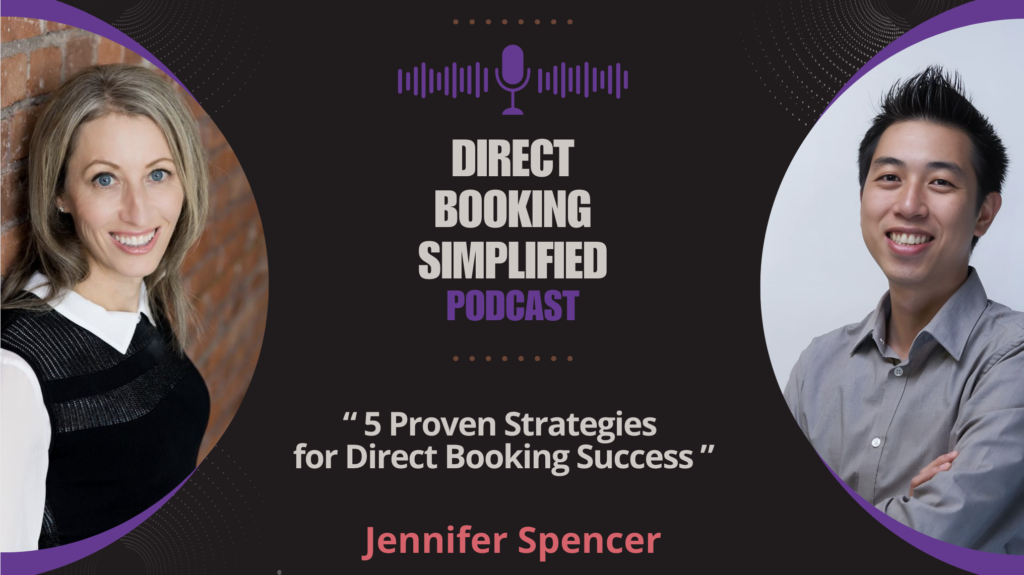
Jennifer Spencer featured on the Direct Booking Simplified Podcast sharing 5 proven strategies for direct booking success.
Booked Solid Podcast

5 Proven Strategies for Direct Booking Success with Jennifer Spencer

 “Trust comes from having a secure site and a seamless booking process. If your site instills confidence, guests will book without hesitation.” – Jennifer Spencer In the latest episode of Direct Booking Simplified, we sat down with Jennifer Spencer, a seasoned host with over a decade of experience in the vacation rental industry. Jennifer owns two stunning properties: one nestled in the Canadian Rockies and another in the sunny paradise of Maui. Her journey from renting a family ski getaway to running a thriving vacation rental business offers a wealth of insights for both seasoned hosts and newcomers alike. Summary & Highlights A Journey from Ski Enthusiast to Business Success Jennifer’s story began ten years ago when she purchased her first vacation rental property in the Canadian Rockies. Initially intended as a home base for her family’s ski trips, Jennifer soon realized its potential as a vacation rental. “Back then,” she shared, “Airbnb wasn’t even in my market. The primary player was VRBO, and there were no guest fees.” Her entrepreneurial spirit led her to transform the property into a six-figure revenue business. Fast forward to 2021, Jennifer expanded her portfolio by purchasing a property in Maui. This move showcased her ability to diversify not just geographically but also seasonally, offering her guests a choice between the ski slopes and the sea. The Turning Point: Building a Direct Booking Website In 2017, Expedia’s acquisition of VRBO was a pivotal moment for Jennifer. Recognizing the growing control OTAs were gaining over her business, she decided to establish her own direct booking website. “I didn’t want to be 100% reliant on a large multinational company,” she explained. “Having my own site gave me the ability to capture repeat bookings, reduce guest fees, and build direct relationships with my guests.” This decision not only provided Jennifer with more control but also helped her retain a larger share of her revenue. Key Strategies for Direct Booking Success Jennifer shared several actionable strategies during the episode that have been instrumental in her direct booking success: The Importance of Taking Action Jennifer’s advice for hosts looking to grow their direct booking strategies is simple: “Take action.” Whether it’s setting up a property management system, building a direct booking website, or sending your first marketing email, she believes progress comes from doing. “You’ll learn and grow from the process,” she encouraged. Join the Conversation This episode is packed with more insights, including Jennifer’s mindset on overcoming perfectionism and how she cross-markets her properties. Be sure to listen to the full episode for a deep dive into her strategies. Want to connect with like-minded hosts and learn more direct booking strategies? Join our Direct Booking Simplified community and continue the conversation. And if you’re ready to take control of your bookings, CraftedStays can help you build a secure, guest-friendly website that reflects your unique brand. Book a demo today and see how we can help you grow your direct bookings. Follow Jennifer Here ⤵️ Transcription Jennifer: Trust comes from having a secure site from having a tool in place that is seamless for them to book. And when you start to put kind of roadblocks or friction or things that make them question, they may not proceed with the booking, right? So I think a testament to your site is if people book and you have had no conversation with, like, I get that. Jennifer: You know, someone just books off my site, my, my direct booking site. And I’m like, awesome. I don’t know necessarily. I mean, I could find out where they came from, Google analytics and things like that, but like when I initially get that, I’m like, awesome. That means my site looked trustworthy enough that they would just go ahead and make that booking without reaching out to me, without asking me any questions. Jennifer: Right. And that’s what you want, right? You want the credibility and the authority and trustworthiness that people get from booking on an Airbnb or on Airbnb or VRBO. That’s why they’re working there, right? So if you can instill that confidence in your own site, then that’s when you’ll have a lot of success with direct bookings. Gil: Hey folks. Welcome back to direct booking simplified. We break down the strategies and tactics to win and direct bookings on today’s show. I have Jennifer Spencer, Jennifer. Welcome to the show. Jennifer: Thank you. So great to be here. Thanks for having me. Gil: Yeah. Where are you calling in from right Jennifer: Uh, I am in Calgary, Canada. Um, it’s a little bit chilly here right now. Um, so yeah, I’m, I’m located in, in, uh, Canada. Gil: Yeah. And you’re also, you have properties also in the States, not the, not the major islands, Jennifer: Yeah, Gil: but the minor islands. Jennifer: yes, well, I have exactly. Yes, that’s true. So, yeah, I own 2 vacation rental properties. 1 is in the Canadian Rockies here close to my house. It’s still 4 hour drive and the other 1 we have in Maui, we just bought in 2021 so and I have owned my Canadian property for 10 years and actually just celebrated 10 years. Jennifer: So, like, 10 years, about 3 days ago, we got the keys to that property and it’s, uh. Totally changed my life. Gil: Wow, what was the story behind getting that first Canadian Rockies property there? Jennifer: Yeah. So, I mean, I’ve always been into real estate and I bought my first place when I was like, 24. It’s always been my thing. Um, but the reason we actually bought this particular property is that we are a ski family and all three of my kids were ski racing and we were coming back and forth from the mountains a lot. Jennifer: And so we decided, okay, let’s, you know, get a, Home base in the mountains and so we bought this property and really with not the intention of having it

Direct Booking Simplified Podcast episode featuring Jenn Boyles discussing personalization strategies for increasing direct bookings.
Booked Solid Podcast

Personalization is the Key to Direct Booking Success: From 0 to 80% Direct Bookings with Jenn Boyles

“I didn’t know there was a thing called direct bookings. I just knew I needed to do what I had to do—build my own brand and go after my own bookings.”   In our latest episode of Direct Bookings Simplified, we sat down with Jenn Boyles, a trailblazer in the world of direct bookings and marketing strategies for short-term rentals. Jenn has a wealth of experience as a host, marketer, and coach, and her journey from hosting an apartment in France to launching her marketing platform, BookDirectPro, is nothing short of inspiring. Jenn’s insights into building a successful direct booking strategy are invaluable. Here’s a snapshot of what we discussed—be sure to listen to the full episode for more tips on Simplifying your Direct Bookings Summary & Highlights Meet Jenn BoylesJenn Boyles is the founder and CEO of Direct Booking Success – the podcast | the summit | the program. Her mission is to help vacation/short-term rental property managers, owners and hosts increase their revenue and control with the power of direct bookings. She started as a property manager and owner herself, managing her own award-winning properties from 2013 to 2024. Finding herself with a property in an over-saturated area was what initially led her down the path of building her own direct booking business. She is the host of the weekly Direct Booking Success Podcast which is produced with a mix of educational solo episodes and interviews with Hospitality and Accommodation professionals along with fellow property managers and owners.  Jenn is also the founder of the annual Direct Booking Success Summit. This event is a FREE marketing and hospitality educational online summit for vacation/short-term rental property managers and owners who want to increase their revenue and control in their own business with direct bookings. Her latest venture is founding Book Direct Pro, the all-in-one marketing platform built for vacation rental pros by a vacation rental pro. With Book Direct Pro, Jenn aims to simplify and streamline the entire marketing process, giving hosts more control over their bookings and profits. It’s designed to cut out the middleman, empower property managers, and make direct bookings a breeze. 1. The Power of Storytelling in Marketing Jenn’s success in the UK stemmed from building a strong brand before launching her property. By documenting the construction and branding of her unique canal boat in Liverpool, she created a buzz and established trust with potential guests. “People followed the journey and joined a waitlist, so when we launched, they were ready to book.” Tip for Hosts: Share the story behind your property—whether it’s a renovation project, local attractions, or memorable guest experiences. Use social media, email newsletters, and even simple videos to bring your journey to life. 2. Start with One Property (and One Strategy) Contrary to popular belief, direct bookings aren’t just for large portfolios. Jenn emphasized how smaller hosts can leverage their personal touch and storytelling to compete with big players. “You don’t need 50 properties to make this worthwhile. Even with one or two, you can create a personal connection that larger operators can’t match.”  Actionable Idea: If you’re a remote host, batch-create content during visits. Showcase your property’s personality, local attractions, and unique amenities. 3. Focus on Guest Data Collection Jenn highlighted the importance of owning your guest relationships through email marketing. Platforms like Airbnb won’t share guest data, so hosts need to find ways to capture it independently. “Once you have their email, you can connect directly, nurture relationships, and bring them back for future stays.”  Practical Advice: Use tools like Wi-Fi sign-ups, digital registration forms, or automated guest surveys to collect guest emails. 4. Leverage Automation and Tools For busy hosts balancing multiple responsibilities, Jenn stressed the value of automation. Her platform, BookDirectPro, simplifies marketing by combining email marketing, social media scheduling, landing pages, and more into one tool. “Marketing doesn’t have to take over your life. Set up systems, automate what you can, and focus on what matters.” Pro Tip: Use automation to schedule social media posts and email campaigns. Dedicate time monthly to batch-create content, then let technology do the heavy lifting. 5. Build Trust Through Personalization Jenn shared how personalization drives direct booking conversions. Adding an “About Us” section, featuring reviews, and showcasing local attractions on your website can make all the difference. “People want to know who’s behind the brand. Share your story—it builds trust and encourages bookings.”  Quick Win: Update your website with a personalized bio and real photos of your team or family to foster trust with potential guests. Start Building Your Direct Booking Strategy TodayJenn’s journey is a testament to the power of storytelling, relationship-building, and leveraging the right tools to grow your direct bookings. Whether you’re just starting or looking to scale, her advice is clear: take one step at a time and focus on strategies that align with your goals and resources. If you’re ready to take control of your bookings, don’t miss the chance to try Jenn’s all-in-one marketing platform, BookDirectPro. Use code DIRECTSUCCESS for 50% off your first month, and schedule a free onboarding call to get started. Follow Jenn Here ⤵️ Transcription Gil: Welcome back to direct booking. Simplify where you break down the strategies and tactics to win in direct bookings on today’s show, I have Jenn Boyles, Jenn, welcome to the show. Jenn: Aw, thanks Gil. Thanks for having me. Gil: Yeah, it’s, it’s such a familiar voice. I’ve listened to your podcast on my car drives a lot. Um, so it’s really good to have you on, on this show as well. Jenn: Aw, thanks so much. I hope I haven’t caused any accidents. Gil: No, no, it’s a, it’s a, it’s a very calming conversation. So if anything, it helped me focus. Yeah, there’s not many shows in the direct booking space, um, that talks about direct booking. So I think there’s like the R2 shows and maybe a two or three others. And that’s pretty much it about direct bookings. Um, there’s a lot of more general, um, short term rental ones, but not

CraftedStays Blog Posts

The Power of Segmentation: How to Make the Most of Your Email Lists

If you’ve already mastered collecting emails from your short-term rental or vacation rental website, you’re off to a great start. But simply building a list isn’t enough—you need to know what to do with it. That’s where segmentation comes in. Segmentation involves dividing your email list into smaller groups based on specific criteria. This allows you to deliver targeted, relevant content that resonates with your audience, resulting in higher open rates, click-through rates, and ultimately, more bookings for your short-term or vacation rental. Let’s explore some effective ways to segment your list and why it matters. Why Segmenting Your List is Effective Sending the same message to everyone on your list can lead to disengagement. Not all guests are in the same stage of the booking journey or interested in the same kind of stay. Segmentation helps you: Can You Segment with Your Email Tool? Absolutely! Whether you’re using a simple tool like Mailchimp or a robust platform like HubSpot, segmentation is within your reach. Basic tools allow for simple segmenting based on tags or behaviors, while advanced platforms offer dynamic lists and automation to scale your efforts. Start small and grow as your short-term rental guest list grows. Ways to Segment Your Email List 1. Booking Stage Why It Works: Prospective guests and past guests have different needs. 2. Travel Purpose Why It Works: A family vacationer and a business traveler have very different priorities. 3. Geographic Location Why It Works: Local guests may prefer weekend getaways, while international travelers need more lead time to plan. 4. Booking History Why It Works: Tailoring emails to past behavior can increase repeat bookings for your vacation rental. 5. Engagement Level Why It Works: Keeps your list clean and ensures you’re reaching an active audience. 6. Seasonal Interests Why It Works: Seasonal marketing aligns with when guests are likely to travel. 7. Lead Source Why It Works: Knowing where your guests came from can help you tailor content. How to Segment with Ease Tools like Mailchimp let you create tags or groups to manually segment your list. Platforms like HubSpot take it further with dynamic lists, advanced filters, and automation workflows. No matter which tool you use, the key is organizing your contacts with the data you already have to drive more bookings for your short-term rental or vacation rental. Final Thoughts Segmenting your email list is one of the best ways to turn a passive list of contacts into a highly engaged audience of potential and repeat guests. Whether you’re targeting families, re-engaging past guests, or marketing to travelers planning a seasonal trip, segmentation ensures you’re sending the right message to the right person at the right time. CraftedStays Pro Tip: Our platform allows you to collect and organize guest data seamlessly, so creating segmented lists becomes a breeze. Ready to learn more? Book a demo to see how it works.

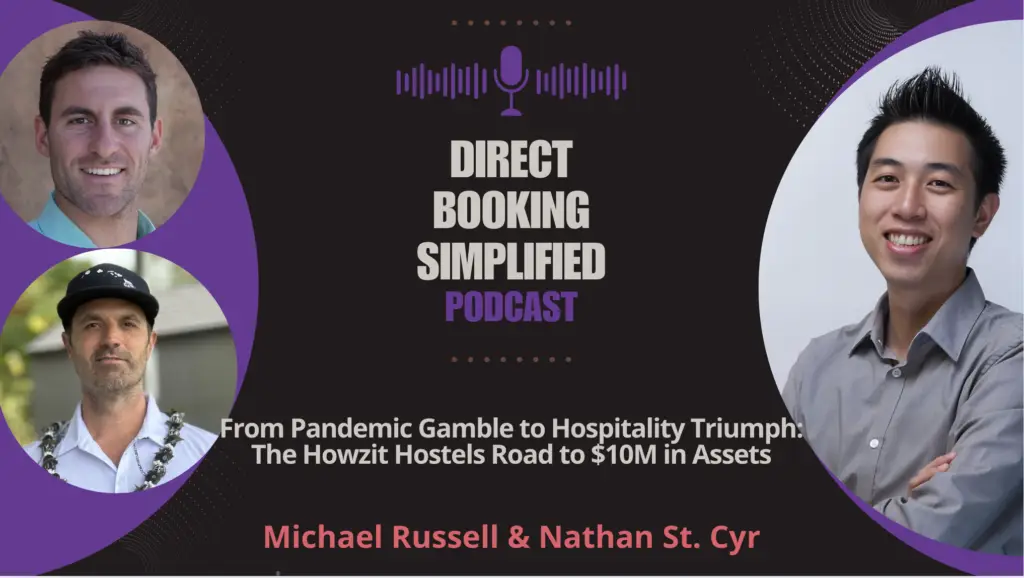
Michael Russell and Nathan St. Cyr featured on the Direct Booking Simplified Podcast discussing Howzit Hostels' $10M hospitality success.
Booked Solid Podcast

From Pandemic Gamble to Hospitality Triumph: The Howzit Hostels Road to $10M in Assets with Michael Russell and Nathan St.Cyr

When you think of hostels, the image of a small, budget-friendly, often outdated lodging comes to mind. Nathan and Michael, the co-founders of Howzit Hostels, are flipping that narrative. In our latest podcast episode of Direct Booking Simplified, these two entrepreneurs shared how they leveraged their backgrounds in real estate and luxury short-term rentals to redefine what a hostel can be—and how their direct booking strategy is a game-changer Summary and Highlights Meet the Founders Nathan and Michael are the driving forces behind Howzit Hostels, a brand synonymous with upscale, community-driven hostel experiences in Hawaii. With $10 million in assets, $2.5 million in annual revenue, and awards like “Best Hostel in North America,” their journey is as much about bold decisions as it is about smart strategies. Their story began in the midst of the pandemic when most were pulling back. They took a leap of faith and acquired their first hostel in Maui. By listening to guests, implementing airtight systems, and building a values-aligned team, they’ve turned a once-average property into a high-performing hospitality business. The Secret Sauce: Direct Bookings One of the most valuable insights Nathan and Michael shared was their approach to direct bookings. By increasing their direct bookings by 12%, they’ve not only saved $59,000 annually in OTA commissions but have also increased the valuation of their business by $630,000. As Nathan explained, “Direct bookings are not just about revenue; they directly impact net income, which drives valuation. For a commercial hospitality business like ours, that’s everything.” Direct Booking Tactics That Work Mindset and Tactical Advice Nathan’s mindset advice was simple but profound: “Reframe your relationship with fear and failure.” Michael’s tactical advice? Don’t hesitate to seek help, whether it’s through your network or professionals. Why It Matters For hosts navigating the ever-competitive hospitality market, Nathan and Michael’s story is a reminder that bold decisions, meticulous planning, and leveraging the right strategies can lead to remarkable results. If you want to hear more about how they’ve built their business, tackled challenges, and created a sustainable direct booking strategy, listen to the full episode of Direct Booking Simplified. Join the CommunityWe’re passionate about empowering hosts with tools and strategies to succeed. Join our CraftedStays community to connect with like-minded professionals, learn proven tactics, and discover how our platform can help you build a direct booking powerhouse. Follow Michael and Russell Here ⤵️ Transcription Gil: Hey folks, welcome back to Direct Booking Simplified, where we break down the strategies and tactics to win in direct bookings. On today’s show, I have Howzit Hostiles, Nathan, and Michael. Welcome to the show. Nathan: Yeah, it’s great to be on. Thanks for having us, Gil. Gil: this is pretty cool. I’ll admit to both of you that this is our first pairing. We’re like 40, almost 50 episodes deep and we have not yet had a duel on the show. So I’m very interested in how this is going to be and how we can bounce ideas off each other. It’s always been a one on one. I haven’t even done a single show, uh, to be quite honest, but I’m very interested in kind of like having you guys both here and, uh, having you guys talk about just how you guys, Divide and conquer both sides of your business. Gil: Um, but before we get too deep into it, uh, Nathan, Michael, do you mind kind of sharing a little bit about your property management, what you guys have done and kind of how you guys work together? Nathan: Yeah, absolutely. So I’ll kind of kick us off here. Um, so Mike Russell and myself were the, the co founders, uh, of Howzit Hostiles. Um, if you, we each have our own story, obviously that, uh, from a, from an origin story that led to a moment. But, um, I think what people are most interested in with us, there’s, there’s two sides of our story that, that we share. Nathan: That people are drawn to, um, and, and want to hear about. And one side of it is the, kind of the investment in the real estate side where, you know, we, we basically. Took a 400, 000, uh, down payment and investment and, uh, forced about 4 million of equity in under two years. And that has now led to us owning from that 400, 000 down payment, 10 million worth of assets, uh, where we’re driving. Nathan: You know, 2. 5 million worth of revenue, uh, 800, 000 worth of NOI and 500, 000 worth of net income. And so from the investment side, I think that that part of the story is like, wow, you guys really compressed time and utilized your entire life’s work to recognize an opportunity and then jumped on it and, and, and took advantage. Nathan: From the hospitality side. I think that the part that people really go, Whoa, wait a minute, what hostile, what is a hostile? You know, like, aren’t these all dirty dingy things that like, and, um, again, we, we recognized opportunity and when they go, Whoa, they go look at our website, they go look at what we’re doing. Nathan: Um, there’s these two, these two guys. knew nothing about hostels and in the midst of a pandemic when everybody else was, you know, you know, really wait, you know, sitting back going, what’s going to happen to the world. We decided to take massive action and go all in on our vision and uh, purchased an, an existing hostel. Nathan: And in two and a half years, uh, we were awarded as the best hostel in the North America. And so people from the hospitality side are like, wait a minute, you had no experience and you went in and created the best hostel in North America. What the heck? And, um, and so when we look at the hospitality side of what we’ve done, we really attribute that to these three, three major components. Nathan: And

Custom domain names and their importance for direct booking sites to enhance branding and credibility
CraftedStays Blog Posts

Why Having Your Own Domain Name Matters for Your Direct Booking Site

Direct booking sites are the cornerstone of a successful short-term vacation rental business. They allow hosts to connect with guests directly, bypass platform fees, and create a personalized booking experience. But not all direct booking sites are created equal, and one of the most significant differentiators is your website’s domain name. Choosing a custom domain over a hosting provider’s or PMS-generated subdomain can make all the difference in building trust, increasing bookings, and securing long-term success. What Is a Custom Domain? A custom domain is a unique, personalized web address like YourPropertyName.com or SmokyMountainCabins.com. It reflects your brand and is completely owned by you. Custom domains are registered through domain registrars like GoDaddy, Google Domains, or Namecheap and can be connected to any website platform. What Is a Subdomain? A subdomain, on the other hand, is a secondary domain that is part of a larger main domain. For example, YourPropertyName.pms.com is a subdomain provided by a Property Management System (PMS) or hosting provider. While subdomains can be a convenient starting point, they come with significant limitations, as we’ll explore below. 1. Building Trust and Professionalism Imagine you’re booking a stay at a cozy mountain cabin. Which URL would you feel more confident booking through: A custom domain like the first example instantly conveys professionalism and legitimacy. Guests are less likely to second-guess the site’s authenticity, making them more likely to complete a booking. Subdomains provided by PMS platforms or hosting services can seem generic and unpolished, potentially causing hesitation in potential guests. 2. Enhanced Branding Opportunities Your domain name is more than just an address—it’s a vital part of your brand identity. A custom domain lets you create a cohesive and memorable brand experience that extends beyond your website. For instance, having a domain like SmokyMountainCabins.com reinforces your branding across platforms like social media, email marketing, and even print materials. In contrast, a PMS subdomain dilutes your brand, as the hosting provider’s name is front and center. With a custom domain, you’re always in control of how your brand is presented. 3. Better SEO Performance Search engines like Google rank websites with custom domains higher than those using subdomains. Why? Custom domains are seen as more authoritative and relevant to search queries. Additionally, having the flexibility to choose a domain name allows you to incorporate keywords directly into your URL. For example, BeachfrontVillas.com signals to search engines (and potential guests) exactly what your site offers, helping you stand out in search results. Using a custom domain in addition to these other Direct Booking SEO optimizations can greatly boost your site’s ranking performance. 4. Control and Flexibility A subdomain provided by your PMS or hosting provider may seem convenient, but it comes with limitations. For instance, you might be restricted in customizing your site’s URL structure or features. Worse, if you ever decide to switch providers, migrating from a subdomain can be a headache. With a custom domain, you’re in full control. You can optimize your URL structure, implement redirects, and make changes as your business grows—all without being tethered to a third-party provider’s restrictions. 5. Increased Guest Confidence Guests care about security when booking online. A custom domain paired with an HTTPS certification tells guests your site is secure, helping them feel confident about sharing personal and payment information. On the other hand, subdomains often appear less professional, and guests might question whether their booking details are truly safe. The peace of mind that a custom domain provides can significantly impact your conversion rates. Success Stories One host who transitioned from MyVacationRental.pms.com to a custom domain like, LakesideCottages.com, saw a 25% increase in direct bookings within the first three months. Guests cited the improved professionalism and trustworthiness of the new domain as a key factor in their decision to book. How CraftedStays Can Help At CraftedStays, we understand that setting up a custom domain can feel like a technical hurdle. That’s why we provide all users with a temporary subdomain to use while they’re crafting their site, giving them time to finalize their custom domain. When you’re ready to make the switch, our team is here to help. We don’t charge for custom domains, and we’re happy to walk you through the process step by step, ensuring everything is set up correctly. We believe that a custom domain is a game-changer for direct booking sites, and we’re committed to making it as easy as possible for you to get started. Conclusion Investing in a custom domain name is one of the smartest decisions you can make for your direct booking site. It builds trust, strengthens your brand, improves SEO, and ensures you’re in control of your business’s future. If you’re ready to take your direct booking site to the next level, let CraftedStays help you get started. Contact us today to learn how easy it is to connect your custom domain and create a site that guests can’t resist booking.

Person working on a laptop to build a direct booking website using WordPress for property management.
CraftedStays Blog Posts

How to Build a Direct Booking Website using WordPress

Looking to build your direct booking site on WordPress? Here’s a detailed guide on how to build your site, what hosting services to use, what plugins and themes you need, and some limitations you should be aware of. Owning a direct booking website is essential for short-term rental operators seeking to reduce OTA fees, build guest relationships, and gain control over their business.While WordPress offers flexibility and scalability, building a site from scratch can be a daunting, time-intensive process. In this guide, we’ll walk you through the steps to build a direct booking site using WordPress. Step 1: Secure Your Domain Name When you build a direct booking site using WordPress, you want to first start off buy making sure that you are using securing a custom domain name. This domain name is where your guests will find your site. In this guide we’ll walk you through using a temporary domain to get your site up and running and then registering the custom domain that you purchased. You can read more about why a custom domain is more effective than a provided sub-domain url. Top Domain Registrar Options How to Register and Configure Your Domain Step 2: Choose and Set Up Your Hosting Provider Top Hosting Provider Options How to Configure Hosting 1. Purchase Hosting: Sign up for a hosting plan and link your purchased domain. 2. Set Up Your Site: Log in to your hosting dashboard and choose “Add Website” or “Set Up Site.” Step 3: Install WordPress Now that your have your hosting provider set up, let’s continue to build a direct booking site by installing WordPress. WordPress is a platform used by many agencies and companies to build flexible websites. Why it was born out of a platform to host your blog, many have now used it to build business sites. Though it has it’s limitations and complexities, it can build a beautiful site with a bit of effort. Installing WordPress 1. Choose your hosting location. This will be dependent on the location of your guests visiting your site. In more advanced options, hosting will be spread across multiple data-centers bue most commercial hosting providers only provide one server location so while not optimal pick the one that’s closest to the majority of your guests. 2. Choose Create new website as your option since we’re starting fresh. If you have an existing site you’re taking over you can copy existing site. Keep in mind that this is not often recommended as this does not copy all plugins and data associated with that wordpress instance. 3. Provide the domain that you have registered. Alternatively you can provide a temporary domain to be used. For this guide, we will set up our domain at the end to get through the critical steps to set up the direct booking site. Select your domain and follow the prompts to configure your WordPress installation: 4. Create a Login for this wordpress account. This is different than you Hostinger account. Hostinger is just the hosting provider (the server where you wordpress site lives). You’ll have a different login for your wordpress site for when you make necessary changes and plug-in upgrades. 5. Complete the installation and access your WordPress using the “Admin Panel” button on the hosting provider dashboard Step 4: Set Up and Configure the Homey Theme Why Homey? Homey is a robust WordPress theme for vacation rentals, offering features like built-in booking tools, customizable property pages, and advanced search filters. It makes it an effective way to build your direct booking site using WordPress without needing to design all the logic that goes into building the site. How to Install the Homey Theme 1. Purchase the Homey theme from ThemeForest. Tip: Opt for the extended license so that you get upgrades for this plug-in. These updates are important as they include security patches. 2. Extract the files from the downloaded zip from Themeforest. 3. Navigate to Appearance → Themes → Add New → Upload Theme. 4. Upload the .zip file, install, and activate the theme. Install Required Plugins 2. Activate the Plugin after each installation. 3. Repeat this process for all plugins Prefer a faster path without plugins? Use a short term rental website builder to launch in minutes Import Demo Content 1. Navigate to Appearance → Homey Options → Import Demo Data 2. Select the demo layout that best matches your needs (e.g., single property or multi-property). 3. Follow the prompts to import pre-built pages, menus, and content. Be patient, as it can take up to 15 minutes to generate all necessary files. Step 5: Create and Manage Property Listings Now that we have our structure in place we’ll need to add our properties on our direct booking site. When we downloaded the demo data, it provided us with lots of examples on how to provide our property details. Before getting started it might be helpful to browse through some of the examples. We’ll end up removing these later so that we don’t have placeholder properties on our site. Adding Properties 1. Navigate to Listings → Add New in the WordPress dashboard. 2. Fill in details: 3. Remove all other demo listings from the site. 3. Tip: Remember to manually update listings if you add new properties or change your PMS. WordPress does not sync automatically. Calendar and Pricing 1. Login to your front-end dashboard. You do this by visiting your live site and selecting “admin” in the upper right corner. 2. Select “Edit” on one of your listing and access the Calendar tab 3. Set up availability calendars by selecting Import under the “Sync ICal” dropdown menu. 4. Go to your PMS and find the option to export your ical calendar for each property. They’ll provide you with a URL to sync calendars. 5. Enter your iCal URL into the Feed URL option. Tip: The calendar is pulled every 4 hours by default. This does present the slight risk of double booking if someone books before your site pulls the

Scroll to Top