CraftedStays Blog Posts

Virtual Team Leadership: Scaling Your Short-Term Rental Business Beyond Solo Operations

The most successful short-term rental operators understand a fundamental truth: you can’t scale beyond your personal capacity without building an effective team. Whether you’re managing properties in high-demand markets like San Diego, Nashville, or Austin, or exploring emerging destinations, the transition from solo operator to team leader represents the critical inflection point between surviving and thriving in the vacation rental industry. The reality of virtual team leadership in short-term rentals is both empowering and humbling. Your team members—whether virtual assistants, property managers, or specialized contractors—will realistically take about 80 percent of tasks off your plate. That remaining 20 percent? That’s where your leadership, strategic thinking, and decision-making capabilities become invaluable. The Evolution from Task Manager to Strategic Leader Building a successful remote team for your vacation rental business requires understanding that leadership roles evolve dramatically as your portfolio grows. In markets like Southern California, where property management demands are intense due to high guest expectations and competitive pricing, operators who master this transition gain significant advantages over those who remain trapped in day-to-day operations. Initially, you serve as teacher, trainer, and manager simultaneously. Your virtual assistants need comprehensive guidance on everything from guest communication protocols to market-specific regulations that vary dramatically between states like California and Tennessee. However, the ultimate goal involves transitioning into a supportive role where team members take ownership of specific responsibilities. This evolution creates a powerful dynamic: when virtual team members feel genuine ownership over their work—whether managing social media marketing for vacation rentals for your Joshua Tree property or coordinating turnovers for your Smoky Mountain cabins—they develop the pride and accountability that drives exceptional results. Geographic Considerations for Virtual Team Management Different markets present unique challenges for remote team leadership. Properties in tourist-heavy regions like Oakhurst near Yosemite require virtual assistants who understand seasonal booking patterns and can communicate effectively with guests planning outdoor adventures. Meanwhile, urban markets in Texas or Florida demand team members skilled in corporate travel coordination and extended stay management. Successful operators recognize that virtual team effectiveness often correlates with understanding regional market dynamics. SEO strategies for vacation rentals vary significantly between mountain destinations and beach markets, requiring specialized knowledge that virtual assistants can develop with proper training and market exposure. Systems That Scale Across Multiple Markets The most effective virtual team leadership approach involves creating standardized systems that adapt to different geographic markets while maintaining consistent quality standards. Whether your properties span from California wine country to Tennessee mountain retreats, establishing clear protocols for guest communication, maintenance coordination, and branding strategies for direct bookings enables virtual assistants to deliver exceptional results regardless of location. Consider implementing role-specific organizational charts that define responsibilities clearly. A virtual assistant managing social media for your Big Sur property needs different skills than one handling guest services for your Austin urban rentals. However, both should understand your overall brand standards and guest experience objectives. The Psychology of Effective Delegation Virtual team leadership success often hinges on understanding personality compatibility and role alignment rather than simply finding the cheapest labor. The most productive partnerships develop when operators match virtual assistant strengths with specific business needs. Some team members excel at creative tasks like growing direct bookings with consistency and value, while others demonstrate exceptional analytical skills for pricing optimization across different markets. Providing context becomes crucial for virtual team effectiveness. Rather than simply assigning tasks, successful operators explain the strategic reasoning behind each project. When a virtual assistant understands that updating property descriptions serves niche marketing strategies’ goals for specific geographic markets, they can contribute ideas and improvements that extend beyond basic task completion. Building Remote Culture That Drives Results The transition from micromanagement to transformational leadership represents the difference between surviving and scaling in competitive vacation rental markets. Virtual assistants who understand your vision for guest experiences in markets ranging from Napa Valley to Nashville can make autonomous decisions that align with your business objectives. Creating brief-writing systems that include project context, success metrics, and strategic objectives empowers virtual team members to think strategically rather than simply execute tasks. This approach proves particularly valuable when managing properties across different time zones and regulatory environments, especially when implementing email marketing strategies that need to account for regional preferences and booking patterns. Technology Integration for Geographic Scalability Modern virtual team leadership leverages technology to maintain quality standards across diverse markets. Property management systems, communication platforms, and mobile optimization strategies enable small teams to deliver personalized experiences that rival larger management companies. However, technology alone cannot replace the human elements of leadership that drive exceptional virtual team performance. Regular one-on-one meetings, performance feedback, and professional development opportunities create the foundation for long-term team loyalty and improved results. The most successful short-term rental operators recognize that virtual team leadership represents both an art and a science. While systems and processes provide the framework for scalability, the human elements of trust, communication, and shared vision ultimately determine whether your remote team becomes a competitive advantage or operational burden. Ready to Scale Beyond Solo Operations? Building an effective virtual team for your short-term rental business requires more than just finding affordable labor—it demands strategic thinking, clear communication, and systems designed for sustainable growth. Whether you’re managing properties in California’s competitive markets or exploring opportunities in emerging destinations, the right approach to virtual team leadership can transform your operational capacity and profitability. Transform your property management approach with CraftedStays’ comprehensive platform designed for growing operators. Our integrated solution combines powerful direct booking capabilities with the management tools you need to coordinate remote teams effectively. Start building your scalable vacation rental business today at CraftedStays.co and discover how the right technology foundation can support your virtual team leadership success.

Booked Solid Podcast

Building Brand Standards in Short-Term Rentals with Nikkei Cavany – Rosenberg

“Stop making Airbnb more money. Do not ever send someone another Airbnb link. You are the problem. Owning your customer is the most important part of any successful business strategy.” This raw admission from Nikkei Rosenberg, owner of Staylah Rentals with over 100 properties under management, captures exactly what’s broken—and what’s possible—in our industry. While most hosts chase occupancy rates and revenue per available room, Nikkei has built her empire on something far more valuable: unshakeable brand standards that turn first-time guests into repeat customers. In this episode, Nikkei reveals how she scaled from managing individual properties to commanding a portfolio across multiple Southeast markets, all while maintaining the kind of consistency that makes guests choose her brand over browsing endless Airbnb listings. Her approach isn’t just about better hospitality—it’s about creating a direct booking engine powered by trust. Summary and Highlights 🌟 Meet Nikkei Rosenberg Nikkei Rosenberg brings nearly two decades of hospitality expertise to the short-term rental industry, starting her journey at just 17 years old in St. Augustine, Florida—long before Airbnb existed. This early foundation in direct bookings shaped her philosophy that property owners should control their guest relationships, not surrender them to platforms. After building the Southeast market for a major national management company and completing over 500 property setups, Nikkei launched Staylah Rentals with her business partner. The Florida market alone grew from zero to 60 properties in just 18 months, driven by organic referrals and a reputation for operational excellence. As both a real estate agent covering the Florida market and a property management company owner, Nikkei serves clients from initial property acquisition through daily operations. Her unique perspective spans the entire investment lifecycle, helping operators avoid common pitfalls while building sustainable rental businesses. Recently approved as a Marriott Bonvoy Homes and Villas partner across all 100 properties, Staylah Rentals represents the new generation of professional vacation rental brands that compete on standards, not just price. Connect with Nikkei: Follow her authentic journey on Instagram @investwithnikkei and learn more about Staylah Rentals at staylah.com 🎯 The Three Pillars of Brand Standards Visibility: Making Your Brand Impossible to Ignore Building brand standards in short-term rentals starts with visibility—ensuring guests encounter your brand at every touchpoint. Nikkei’s approach goes far beyond basic property signage: Physical Presence: Every Staylah property features branded QR codes, house manuals, area guides, and welcome signage. Their maintenance van is wrapped, the operations manager drives a branded Tesla, and all employees wear Staylah gear when on-site. Digital Consistency: Guest communication consistently references the “Staylah care team,” ensuring the brand name appears in every interaction while staying compliant with platform restrictions. Retargeting Strategy: Year-round marketing keeps Staylah visible to past guests, building the kind of brand recall that drives repeat bookings and referrals. This level of visibility creates professionalism that guests notice. When branded maintenance staff appear during a stay, it signals that this isn’t just another rental—it’s part of a larger operation that takes itself seriously. Consistency: Creating Predictable Excellence The second pillar focuses on consistency across every brand element. For direct bookings to work, guests need confidence that choosing your brand means choosing a predictable level of service. Visual Identity: Staylah maintains strict standards for logo usage, colors, fonts, and tone across all properties and communications. This consistency helps guests immediately recognize the brand experience they’re entering. Operational Standards: Every property meets identical criteria for amenities, cleanliness, and maintenance. Guests don’t have to research individual properties—they book the Staylah experience knowing what they’ll receive. Communication Protocols: From initial inquiry through post-stay follow-up, every interaction follows established patterns that reinforce brand values and expectations. This consistency particularly matters for direct booking conversions because it eliminates the uncertainty that often drives guests back to familiar platforms. Quality: Delivering Hotel-Level Standards in Custom Homes The final pillar combines the personalized experience of vacation rentals with the reliability standards guests expect from established hotel brands. Property Selection: Staylah only manages properties that meet their strict criteria for location, condition, and owner commitment to maintenance excellence. Amenity Standards: Every detail receives attention, from sheet thread counts and mattress quality to ensuring guests understand how to operate all property features. Preventive Maintenance: Regular safety checks, deep cleaning protocols, and proactive maintenance prevent issues before they impact guest experiences. Guest Experience Design: Each property is staged and stocked to create that “wow, this is incredible” moment when guests arrive. This quality focus recently earned Staylah approval as a Marriott Bonvoy Homes and Villas partner—recognition that their standards align with international hospitality brands. 💡 Key Insights for Property Managers Start with Property Standards, Not Marketing Many operators focus on driving traffic before establishing consistent quality. Nikkei’s approach prioritizes operational excellence first: “We’ve been implementing EOS (Entrepreneurial Operating System) and really defining KPIs, creating accountability structures, and defining roles.” This foundation work pays dividends when marketing efforts scale. Instead of managing individual property reputations, operators can promote a single brand promise across their entire portfolio. Stop Driving Traffic to OTA Links One of Nikkei’s strongest tactical recommendations: “Stop making Airbnb more money. Do not ever send someone another Airbnb link.” She even refused to share Airbnb listings with a potential client who requested them, explaining how clicks without conversions hurt algorithm performance. For operators serious about building direct booking success, this mindset shift is crucial. Every social media post, email, or conversation should direct prospects to owned channels where you can capture contact information and build relationships. Build Community Relationships for Organic Growth Nikkei’s decade in BNI networking demonstrates the power of consistent community involvement. Her philosophy of “givers gain” created the referral network that fueled Staylah’s rapid growth: “I just love being able to add value to people without putting money in someone’s pocket.” This authentic relationship-building approach works particularly well for maximizing value through networking, as it fosters trust and credibility that paid advertising cannot replicate. Building genuine community connections also supports growing direct bookings with consistency that doesn’t rely solely on platform algorithms. 📚 Nikkei’s Book

CraftedStays Blog Posts

What Actually Works in Vacation Rental Influencer Marketing; And What Fails

If you’re new to vacation rental hosting, influencer marketing might seem like an obvious way to fill your calendar. You see beautiful travel photos on Instagram and think, “If that person posted about my property, I’d get tons of bookings!” While influencer partnerships can work, most hosts make expensive mistakes because they don’t understand what actually drives bookings versus what just looks good on social media. This guide breaks down exactly what works in vacation rental influencer marketing and helps you avoid the common pitfalls that waste money without generating revenue. What Is Influencer Marketing for Vacation Rentals? 🤝 Influencer marketing involves partnering with social media content creators who have established audiences. These creators share content about your property in exchange for free stays, payment, or both. The goal is to reach their followers who might book your property. However, not all influencers are created equal. A fashion blogger with 100,000 followers might generate impressive likes and comments but zero bookings for your cabin, while a regional travel blogger with 20,000 engaged followers could fill your calendar. 📅 Understanding this difference is crucial before you invest time or money in any influencer partnerships. What Actually Works: Start With Geography 🗺️ The most important factor in successful vacation rental influencer marketing is geographic targeting. This means working with influencers whose followers live within a reasonable traveling distance of your property. Think about it logically: someone in New York might double-tap a beautiful photo of your mountain cabin in Colorado, but they’re unlikely to book a weekend getaway that requires expensive flights and significant travel time. However, someone in Denver who sees that same cabin might book it for next month. ✈️ Successful hosts research where an influencer’s followers actually live before any partnership. Most influencers can provide audience demographics that show follower locations. Look for creators whose audiences primarily come from your region – typically within a 3-6 hour drive for most vacation rentals. 🚗 This geographic focus matters more than the number of followers. A Denver-based travel blogger with 15,000 Colorado followers will likely generate more bookings for your Colorado cabin than a national travel influencer with 200,000 followers spread across the country. For beginners, start by searching for travel content creators in your state or region. Look at hashtags related to your area and see which influencers regularly post about destinations near your property. Find the Right Type of Content Creator 📸 Not all social media influencers work well for vacation rental marketing. The most effective partnerships involve creators who regularly share travel content, especially vacation rental experiences and destination recommendations. Travel-focused influencers understand what their audiences want to know about accommodations: amenities, location benefits, local activities, and booking processes. Their followers actively engage with travel content and regularly book similar properties. Lifestyle influencers who primarily share fashion, beauty, or general life content rarely convert followers to vacation rental guests, even if they occasionally post travel content. Their audiences follow them for different reasons and aren’t necessarily planning trips or looking for accommodation recommendations. 💄 When evaluating potential influencer partners, look at their recent posts. Do they regularly feature hotels, vacation rentals, or travel destinations? Do their followers ask questions about booking information or travel logistics in the comments? These signs indicate an audience interested in travel planning rather than passive content consumption. Activity-based creators often work well for vacation rentals. Food bloggers who feature destination dining, hiking enthusiasts who showcase trails near your property, or photographers who capture local attractions can all drive relevant traffic to properties in their coverage areas. 🥾 The Critical Research Step Most Hosts Skip 🔍 Before partnering with any influencer, successful hosts perform one crucial research step that beginners often skip: they contact the influencer’s previous hospitality partners directly. Here’s how this works: Look at the influencer’s recent posts and identify other vacation rentals, hotels, or destinations they’ve featured. Find contact information for those properties and send a simple message asking about their experience working with that influencer. Ask specifically: “Did this collaboration generate actual bookings for your property?” 💰 This direct outreach reveals the truth behind impressive engagement statistics. Many influencers can show you screenshots of likes, comments, and story views, but they can’t always demonstrate actual booking conversions for their hospitality partners. Properties that experienced successful partnerships will typically share specific results: number of bookings generated, timeframe for conversions, and quality of guests received. Failed partnerships often generated increased awareness without meaningful booking activity. ❌ This research takes time but prevents expensive mistakes. Hosts who skip this step often discover too late that their chosen influencer has never successfully driven bookings for any hospitality partner. Size Matters: Why Smaller Can Be Better 📊 Beginner hosts often assume bigger influencers deliver better results. In reality, micro-influencers with 10,000-50,000 engaged followers frequently outperform massive accounts for vacation rental marketing. Smaller influencers typically maintain more authentic relationships with their audiences, leading to higher trust levels and booking conversion rates. Their followers view recommendations as genuine suggestions rather than obvious advertisements. ⭐ These creators also offer more reasonable partnership terms that fit realistic vacation rental marketing budgets. They often provide more personalized attention to collaborations because each partnership represents a significant opportunity for their brand. Look for engagement quality over quantity. An influencer with 25,000 followers who receives 100 meaningful comments per post often delivers better results than someone with 100,000 followers who gets mostly emoji reactions. 👍 High engagement rates indicate active, interested audiences who regularly interact with travel content and recommendations. Calculate engagement by dividing total interactions (likes, comments, shares) by follower count for recent posts. Understanding Partnership Costs and Terms 💳 Influencer partnerships involve various cost structures that beginners should understand before negotiations. Some creators work for free accommodation only, while others require payment plus free stays. Trade-only partnerships work best during slower periods when you’re unlikely to book those dates anyway. However, be realistic about value exchange – a one-night stay for an influencer who brings zero bookings represents a

Booked Solid Podcast

“Mountain Mama Cabins” Owner Achieves 71% Direct Bookings Through TikTok Marketing with Brittany Magsig

“Digital media is not going away. When business owners are shying away from doing something uncomfortable, putting their business out on social media, you have to meet the world where they’re at.” What would you do if your social media following could generate 71% direct bookings on just one property? Brittany Magsig, better known as Mountain Mama on TikTok, turned this dream into reality by authentically sharing her love for the Smoky Mountains and building genuine connections with over half a million followers. From conducting virtual therapy sessions as a school social worker to managing a thriving vacation rental through social media marketing strategies, Brittany’s journey demonstrates how authentic content creation can drive direct bookings without expensive marketing campaigns or complex systems. Summary and Highlights 💌 A Letter from Brittany Magsig Hi! We just launched Mountain Mama’s Cabins for guests to book this week. We’ve been vetting and bringing on new cabins for guests to enjoy through our platform, which now connects with my community of over 500,000 Smoky Mountain followers. When my own cabin was fully booked and filled to occupancy, I still wanted to find purpose in creating Smoky Mountain content — and that’s when Mountain Mama’s Cabins was born. Instead of going against the numbers with today’s high interest rates and saturated market prices, I started recruiting cabin owners who believed in my vision to list with me. You can find us and book at @mountainmamascabins on TikTok and Instagram, and at Mountain Mama Cabins on Facebook! 👩‍💼 Meet Brittany Magsig: From Social Work to Social Media Success Brittany Magsig brings a unique perspective to vacation rental marketing, combining her clinical background with creative storytelling. As a licensed social worker (LMSW/LCSW) who worked in schools for 10 years, she developed exceptional communication skills that now serve her content creation and guest relations. Her transformation began in 2020 when she and her husband purchased a cabin in the Smoky Mountains during COVID lockdowns. What started as a personal escape became a profitable venture that allowed her to leave her traditional career and build a business around her passion for hospitality and the mountains she loves. Today, Brittany manages her own cabin with exceptional direct booking rates while co-hosting six additional properties and helping other cabin owners increase their visibility through her Mountain Mama Cabins platform. Connect with Brittany: 🎯 The Psychology Behind Authentic Content Creation Brittany’s background in social work became her secret weapon for creating relatable content. Her clinical training taught her to read people’s perspectives and deliver difficult messages with empathy—skills that translate directly to understanding her audience’s needs and creating content that resonates. “I feel like a lot of what I do online is ministry. I want people to know they’re not alone,” Brittany explains, describing how her personal branding approach goes beyond business promotion to genuine connection. Her vulnerability breakthrough came after appearing on Dr. Phil to help her father with addiction struggles. That experience taught her that being authentically herself—flaws and all—creates stronger connections than any perfect, curated content ever could. 📱 From 58 Followers to Half a Million: The TikTok Strategy When Brittany started her TikTok account in 2021, she had just 58 followers and felt embarrassed about her slow growth. Following advice from content creation coaches, she committed to posting 3-4 times daily about the Smoky Mountains, dedicating exactly one hour after her school social work job to content creation. The platform evolution mirrors her personal growth: “TikTok was literally a perfect mix of utilizing it for my creativity, my expression, and also connecting with people. It’s the best of all worlds,” she reflects on her platform choice. Her content strategy avoids mainstream buzzwords and focuses on genuine storytelling. Rather than chasing every trend, she dedicates 10-15 minutes daily to consuming content strategically, looking for sounds and concepts that align with authentic stories she wants to tell. 🏔️ Building Trust Through Transparent Business Practices Achieving 71% direct bookings didn’t happen overnight. Brittany’s success stems from treating every social media interaction as relationship building for repeat guests rather than simple marketing. Her original booking process, while time-intensive, built incredible trust: “I would even FaceTime them. Some people wanted to make sure I’m legitimate. People trusted me after showing up every day online,” Brittany explains how consistency built credibility. Now using Hospitable for streamlined operations, she maintains the personal touch while scaling efficiently. 🤖 Strategic AI Use Without Losing Authenticity Brittany uses AI tools like ChatGPT strategically for business planning and idea generation, paying $20 monthly for enhanced features. However, she draws clear boundaries around content creation. “I don’t use AI within my content because I think there is such a thing to be said about transparency, authenticity, seeing a real person to relate it to your life,” she emphasizes. Her approach to AI mirrors best practices for hosts: This balanced approach allows her to leverage efficiency tools while maintaining the authentic voice that built her following. 📈 Scaling Success: From Personal Brand to Business Platform Recognizing that other Smoky Mountain cabin owners struggled with bookings while she consistently filled her calendar, Brittany launched Mountain Mama Cabins with software developer partner Andrew. This platform allows quality cabin owners to benefit from her established audience trust and 1,000+ daily website visitors. Her expansion strategy demonstrates community-driven growth: 💡 Key Takeaways for Direct Booking Success Mindset Foundations “Being comfortable being uncomfortable” remains Brittany’s core advice. She advocates for: Content Strategy Essentials Direct Booking Fundamentals Quality product comes first—excellent guest experiences enable confident marketing. Brittany recommends: 📚 Rapid Fire Insights Recommended Reading: The Subtle Art of Not Giving a Fck* by Mark Manson “When you have that mindset of not giving a crap within reason, your problems really start to dissipate,” Brittany shares about this transformative read that helped her embrace authenticity. Essential Mindset: “Don’t betray yourself in the process of being you. Whatever that looks like in self-expression, don’t be harmful, don’t be malicious, but just being you.” Success Formula: Good product + personal

Booked Solid Podcast

Dynamic Pricing Gaps Costing Hosts Thousands – Market Data Reveals Competitive Advantage Strategies with Jamie Lane

“There’s so much incremental bookings our industry could be getting if we just did a better job of managing rates throughout the season. More than anything, drive additional revenue over and above new amenities, new photos—it’s just do a better job of how you’re setting rates.” – Jamie Lane The short-term rental landscape has undergone dramatic shifts since 2020, creating both challenges and opportunities for independent hosts building direct booking businesses. From mobile bookings now representing 58% of Airbnb’s traffic to supply growth slowing to just 4% in 2025, understanding these data-driven trends isn’t just helpful—it’s essential for staying competitive. In this comprehensive discussion, we explore the critical insights every host needs to navigate today’s market, optimize their direct booking strategy, and establish sustainable revenue streams that are not entirely dependent on OTA algorithms. Summary and Highlights 🎯 Meet Jamie Lane: The Data-Driven Voice of Short-Term Rentals Jamie Lane serves as Chief Economist and SVP of Analytics at AirDNA, the industry’s leading short-term rental data intelligence platform tracking millions of properties worldwide. With over 14 years of experience in hospitality economics, Jamie brings a unique perspective as both an industry analyst and an active STR host in North Georgia’s mountain markets. His groundbreaking contributions earned him the Innovator/Disruptor award at the 2023 Shortyz Awards, while his market insights regularly appear in the Wall Street Journal, the New York Times, and Bloomberg. Beyond the data, Jamie co-hosts AirDNA’s STR Data Lab podcast and has been documenting his own hosting journey on YouTube, applying market intelligence to real-world property management decisions. Before joining AirDNA, Jamie spent a decade at CBRE, leading research and forecasting teams. He holds a Bachelor of Science in Economics from the University of Georgia and a Master of Science in Business Economics from Georgia State University. 📊 The Great Channel Shift: From Direct Dominance to OTA Growth The pandemic has fundamentally altered guest booking behavior, creating lasting changes that continue to shape the industry. Prior to 2020, many large property managers generated the majority of their bookings through direct channels. Today, OTAs command increasingly larger market share—but the story has an interesting twist. While larger property managers have seen their direct booking percentages decline, smaller hosts are actually trending in the opposite direction. The proliferation of user-friendly PMS platforms, such as Guesty and Hostaway, among others, has democratized direct booking technology that was previously accessible only to enterprise-level operators. “If you think back in 2015, like I was hosting and for me to get a direct booking website, like Guesty didn’t exist, Hostway didn’t exist. Like all these large PMS companies that we sort of take advantage of now just didn’t exist,” Jamie explains. This technology gap meant most individual hosts had no practical path to direct bookings beyond building everything from scratch. 📱 Mobile-First Booking Revolution Perhaps the most striking trend shaping guest behavior is the explosive growth of mobile bookings. Airbnb disclosed that 58% of their Q1 bookings came through mobile devices—up from 54% the previous year. This isn’t just a slight preference shift; it represents a fundamental change in how travelers discover and book accommodations. For hosts building direct booking websites, this trend requires a mobile-first design approach. Sites that feel clunky on mobile devices or fail to optimize for smaller screens risk losing nearly half their potential bookings to competitors with superior mobile experiences. The demographic driving this shift skews younger, with travelers in their twenties and thirties showing a strong preference for completing entire booking flows on mobile devices. These guests don’t just browse on mobile—they research, compare, and complete transactions entirely through their phones. 🏔️ Supply Growth Slowdown: Good News for Existing Hosts After years of explosive inventory growth reaching 20-25% annually during peak pandemic periods, supply growth has dramatically decelerated to approximately 4% in 2025. This slowdown isn’t due to decreased demand—RevPAR remains at all-time highs—but rather reflects challenging investment economics. Home values have increased roughly 50% over three years, while interest rates jumped from 3% to peaks around 8.5%. Meanwhile, STR revenue has grown approximately 30% over the same period. The math simply doesn’t work for many potential investors who previously found attractive cash-on-cash returns in the 20-40% range. “Most investors now are like, the only reason why they’re able to make it make sense is because of the tax benefit. If you’re just underwriting the cash flows and what the investment’s gonna take, unless you have that tax benefit, it doesn’t make sense,” Jamie notes. For existing hosts, this supply constraint creates favorable operating conditions. Less new competition means better occupancy rates and pricing power—assuming hosts stay competitive with their data-driven STR strategies. 💰 The Revenue Management Gap: Leaving Money on the Table Despite the widespread availability of dynamic pricing tools, only about 25% of hosts actively use revenue management platforms. This creates enormous opportunities for data-driven hosts willing to optimize their pricing strategies beyond simple seasonal adjustments. Markets like Gatlinburg and Pigeon Forge, where 85% of listings use revenue management solutions, demonstrate both the competitive advantage and necessity of sophisticated pricing. Hosts in these markets who don’t actively monitor competitor rates and adjust pricing can quickly lose bookings to more agile operators. “There are so many incremental bookings our industry could be getting if we just did a better job of managing rates throughout the season,” Jamie emphasizes. The impact exceeds that of new amenities, professional photography, or other property improvements. 🌍 Economic Headwinds and Guest Behavior Changes Several macroeconomic factors are creating booking pattern shifts that hosts need to understand: Compressed Booking Windows: Guests are waiting longer to commit to travel plans, with booking windows in mountain markets declining approximately 8% year-over-year. This reflects economic uncertainty and guests’ reluctance to commit to future spending. International Travel Trends: American travelers are increasingly choosing overseas destinations, with demand for Japan up 30% year-over-year. Meanwhile, Asian travelers to the US remain 50% below pre-pandemic levels, particularly impacting West Coast markets. Income Tier Differences: The booking slowdown primarily affects budget-tier

CraftedStays Blog Posts

Data-Driven Design Short Term Rentals: 7 Ways Analytics Boost Bookings

The vacation rental industry has evolved far beyond simply decorating a space and hoping guests will book. Today’s most successful short-term rental hosts understand that data-driven design short-term rentals approach separates profitable properties from those struggling to fill their calendars. When you combine thoughtful interior design with concrete guest data, you create spaces that don’t just look good—they convert browsers into bookers. 1. The Marriage of Marketing Intelligence and Interior Design The intersection of data analytics and interior design might seem unlikely, but it’s revolutionizing how smart hosts approach their properties. Traditional interior design relies heavily on aesthetic preferences and broad trends, but vacation rental design must serve a different master: guest expectations and booking behavior. Understanding your guest avatar goes beyond demographics like income levels or job titles. The critical data points that drive design decisions focus on family composition, travel patterns, and specific expectations. Are your guests couples seeking romantic getaways, or families with children ages 5-12 looking for adventure near theme parks? This fundamental distinction shapes every design choice from furniture selection to amenity prioritization. Consider how branding strategies can inform the design of physical phases. When hosts analyze their booking data, they often discover patterns that directly translate to design opportunities. Properties near national parks might see guests who’ve traveled long distances and arrive exhausted, suggesting the need for comfortable seating areas and spa-like bathroom amenities. 2. Why Guest Avatars Drive Design Success The most effective vacation rental designs start with comprehensive guest research rather than Pinterest boards. Smart hosts survey their past guests to understand not just who they are, but why they travel and what they truly expect from their accommodations. Recent data shows that amenities like private pools consistently rank higher than community pools in guest preferences, while features like WiFi in every bedroom and washers/dryers for week-long stays have become non-negotiable basics. These insights only emerge through systematic data collection rather than assumption-based planning. The emotional component of design decisions becomes more predictable when grounded in data. Color psychology and spatial layouts that might feel arbitrary suddenly make sense when filtered through actual guest behavior patterns. Families traveling to escape daily stress respond differently to design elements than business travelers or couples celebrating anniversaries. 3. The Technology Behind Modern STR Design Modern vacation rental hosts have access to unprecedented amounts of actionable data. Unlike the early days of marketing when TV advertisers relied on Nielsen boxes in select homes for viewership data, today’s hosts can track exactly where their website traffic originates, which property photos generate the most engagement, and what amenities correlate with higher booking rates. This wealth of information transforms the traditionally subjective world of interior design into something more scientific. When hosts understand that guests from certain geographic regions consistently book longer stays, or that properties featuring specific color schemes photograph better for social media sharing, design decisions become strategic investments rather than aesthetic gambles. The integration of technology allows hosts to track guest journeys from initial website visit through post-stay reviews, creating a complete picture of how design choices impact booking behavior and guest satisfaction. This approach mirrors how to use email funnels to drive repeat stays by understanding guest behavior patterns throughout their entire journey. 4. From Assumption to Attribution The shift from intuition-based design to data-driven decisions mirrors the broader transformation in digital marketing over the past two decades. Where marketers once launched campaigns with minimal feedback mechanisms, today’s successful hosts can attribute specific design investments to increased booking rates and higher guest satisfaction scores. Consider the power of retargeting in the vacation rental space. When potential guests visit your direct booking website but don’t immediately reserve, strategic follow-up campaigns can bring them back. However, these campaigns are only effective when your property’s design and presentation create that initial emotional connection that data shows resonates with your specific audience. This attribution capability extends beyond marketing into operational decisions. Hosts can now measure whether investing in kid-friendly amenities actually increases bookings from families, or if upgrading to luxury linens correlates with improved review scores and repeat bookings. Understanding how to create look alike audiences with StayFi demonstrates how guest data can inform both design and marketing strategies. 5. Practical Implementation for Small Hosts The beauty of data-driven design lies in its scalability. Small hosts with one or two properties can implement these strategies just as effectively as larger property management companies. The key is starting with the right questions and systematically collecting answers. Begin by analyzing your existing booking patterns. Which months see the highest occupancy? What do your five-star reviews consistently praise? Which complaints appear repeatedly? This baseline data provides the foundation for informed design decisions. Tools like Stay Fi routers capture guest email addresses for everyone who connects to your WiFi, not just the primary booker. This expanded data set enables more sophisticated analysis of guest demographics and can inform everything from furniture selection to local experience recommendations. The investment in guest data collection pays dividends when combined with design insights. Knowing that your guests consistently travel with pets might inspire you to invest in pet-friendly design elements, which can then be highlighted in your marketing campaigns to past guests looking to book their next getaway. Learn more about unlocking the power of email collection strategic tips for hosts. 6. Beyond Pretty Pictures The most common mistake in vacation rental design is prioritizing visual appeal over functional guest needs. A space might photograph beautifully for listing photos but fail to serve the practical needs of your specific guest avatar. Data-driven design flips this equation. When you understand that your guests consistently travel with teenagers, the game room becomes more valuable than the formal dining area. When you discover that most bookings come from guests within driving distance rather than flying visitors, you might prioritize outdoor spaces over proximity to airports. This approach doesn’t eliminate aesthetics—it informs them. The most successful vacation rental designs achieve that perfect balance between Instagram-worthy appeal and practical functionality that

Booked Solid Podcast

Building 95% Direct Bookings Without Marketing Spend: Blake Neitzke’s Relationship-First Strategy

The best way to do this is you should really have the core and foundation of your business is that direct booking model. You also actually need to maintain a presence within the OTAs… I actually think the best way to do it is you have to have all three legs of that stool.” Building a hospitality business that generates 95% direct bookings sounds impossible—especially in a town with just 87 residents. But Blake Neitzke, a West Point graduate and former Special Forces officer, proved it’s not only possible but sustainable. In this episode of Booked Solid, Blake shares the direct booking strategies that transformed a distressed 7-room boutique hotel into a 15-key destination that books solid year-round, often 18 months in advance. What makes Blake’s approach unique isn’t just his impressive conversion rates—it’s his balanced perspective on OTA management, which he maintains while remaining independent. His story provides a blueprint for operators seeking to establish enduring hospitality brands without compromising growth or guest reach. Summary and Highlights 👨‍💼 Meet Blake Neitzke Blake Neitzke is a 2012 West Point graduate who served 10 years in the Army, including time as an infantry officer and Special Forces officer with the 3rd Special Forces Group. In 2019, Blake and his family purchased a distressed boutique hotel property in Round Top, Texas—a town with a population of just 87 people that happens to host the country’s largest antique shows twice yearly. Since then, Blake has expanded from 7 traditional hotel rooms to 15 keys across multiple properties, including renovated 1880s farmhouses, ground-up construction, and strategic acquisitions. His property serves everyone from University of Texas corporate retreats to intimate family reunions, maintaining occupancy rates that keep them booked solid through 2026. 🎯 Key Takeaways: The Foundation of 95% Direct Bookings Starting with 100% Direct Bookings Blake’s approach was unconventional from day one. When he purchased the property, there was no website, no property management software—just a landline and paper bookings. Instead of immediately rushing to OTAs, Blake built his direct booking foundation first: This foundation-first approach gave Blake control over his brand narrative and guest relationships before introducing OTA dependencies. The “Three-Legged Stool” Philosophy Blake advocates for a balanced approach to booking channel management. While direct bookings form the foundation, he maintains a strategic OTA presence because “there are just some people who are comfortable with Airbnb. They like the additional layer of security.” His channel distribution strategy focuses on: Social Media as a Non-Negotiable Trust Builder Blake emphasizes that social media isn’t optional for modern hospitality businesses. Guests are conducting thorough research across multiple platforms to verify legitimacy: “They go to Google and look at reviews, then they go to TripAdvisor, then they look at your website, then they’re gonna go to your social media… Once they’ve been able to vet you through multiple different mediums, it gives them confidence that they’re gonna have a good experience.” This multi-platform verification process is why building trust on your direct booking site is essential for conversion success. This process is why consistent branding and active social presence are essential for direct booking success. Cash Flow Management for Forward Bookings One critical aspect Blake learned through experience is managing pre-paid reservations. With bookings extending to summer 2026, he’s managing over $100,000 in guest deposits—money that hasn’t been earned yet. His approach includes: Asset Selection Strategy: The Sweet Spot Blake’s portfolio evolution reveals a strategic preference for 1-2 bedroom standalone units over large single-family homes. This approach provides: 🏡 Building Relationships That Drive Repeat Business Blake’s success stems from treating hospitality as a relationship business first. Many guests have stayed 14-18 times over six years, and some have become personal friends. This relationship-first approach creates powerful word-of-mouth marketing and eliminates acquisition costs for repeat bookings. His guest retention strategies include: 💡 Rapid Fire Insights Best Book Recommendation: “Five Years to Freedom” by Nick Rowe – A story about mindset during extreme challenges that applies to business resilience. Mindset Advice: “No matter what you do, there’s going to be challenges and friction… Don’t shy away from the hardships and difficulties. Know and understand that it’s part of the process.” Tactical Direct Booking Tip: “Get on the camera and increase your social media presence. Put a toggle on your property management software where people can put in where they found you from, and use it as a metric that you track.” Connect with Blake: 🔗 Start Building Your Direct Booking Foundation Blake’s journey proves that sustainable direct booking success isn’t about choosing sides between OTAs and independence—it’s about building a strong foundation first, then strategically leveraging all available channels. His balanced approach, combined with relationship-focused hospitality, creates a business model that’s both profitable and personally fulfilling. Ready to build your own direct booking foundation? Start your CraftedStays trial and create a website that converts visitors into direct bookings, just like Blake’s success in Round Top, Texas. Transcription Blake: I personally think actually the answer’s in the middle. And so the best way to do this is you should really have the core and foundation of your business is that direct booking model. And you need to be stewarding that at all possibility. You also actually need to maintain a presence within the OTAs, and the reason being is there’s just some people who are comfortable with Airbnb. Blake: They like the additional layer of security and assuredness of the fact that the, there’s some vetting process in there, and so if you want to touch those customers. You have to have a presence on there. Same thing with Expedia. And so I actually think the best way to do it is you have to have all three legs of that stool. Blake: You can’t rely on just one where you shouldn’t. Try to rely on just one. Gil: Before we bring on my guest, I wanted to talk just a little bit about something that I’ve been hearing a lot from Host. I keep on hearing the same

CraftedStays Blog Posts

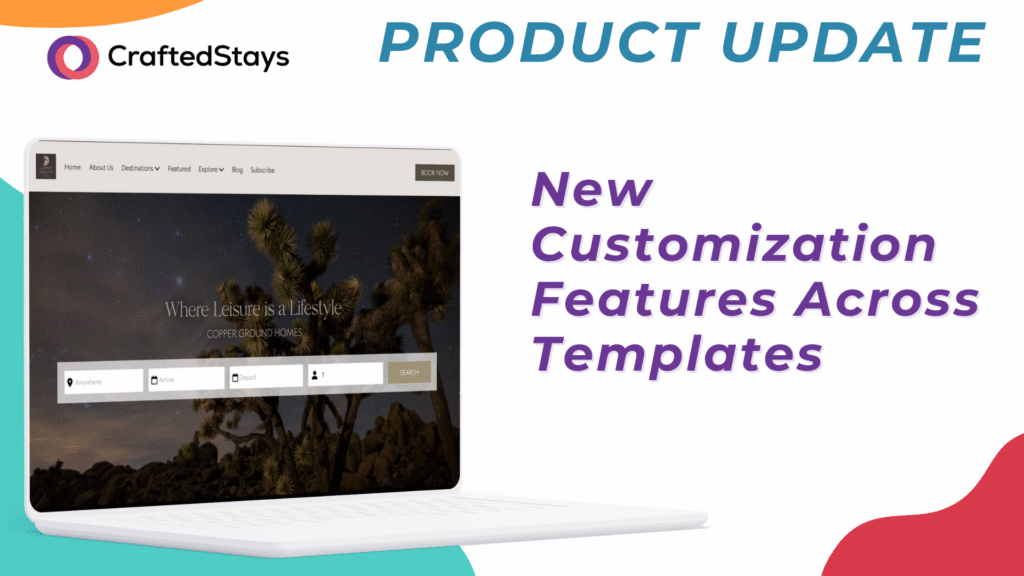
Managing Menu Items in the Refined 2.1 Template

Your website’s navigation is the roadmap that guides guests to book with you. Today, we’re excited to share a powerful new feature that puts you in complete control of that experience: Custom Menu Items in our Refined 2.1 template (with rollout to other templates coming soon). Craft Navigation That Fits Your Brand and Drives Bookings Great navigation isn’t just about looking professional—it’s about conversion. When guests can easily find what they’re looking for, they’re more likely to book. Whether that’s browsing your properties, learning about local destinations, or hitting that “Book Now” button, every menu item should serve your booking goals. Build Navigation That Converts: Six Menu Types Now Available We’ve designed six distinct menu types to give you the flexibility to craft exactly the guest journey you want: 1. Logo Placement Your logo anchors your brand. While it’s fixed at the root level, you can now drag it to the center position for a more balanced header layout. 2. Page Menus Link directly to your custom pages, such as “About Us” or “Contact,” which help build trust and answer guest questions. 3. External Links Send visitors to partner websites, local attraction pages, or any external resource that enhances their stay experience. You can choose whether links open in new tabs. 4. Container Menus (Dropdowns) Perfect for organizing related content. Create a “Destinations” dropdown that showcases different areas you serve, or group properties by location or type. 5. Properties Menu This is where the magic happens. Display all properties, feature-specific listings, or highlight your best performers. It’s one of the most powerful tools for driving bookings. 6. Featured Menu The default search redirect is perfect for multi-property operators. When guests want to browse all your options, this gets them there fast. Bonus: Smart Placeholders Use placeholder menu items to perfect your layout alignment—especially useful for keeping your “Book Now” button prominently positioned on the far right. The “Book Now” Button: Your Conversion Champion Speaking of that “Book Now” button—we strongly recommend keeping it visible at all times. It’s your direct line to bookings, and every second a guest spends on your site should lead them closer to clicking it. Getting Started Access your new menu controls by navigating to: Site → Manage Templates → Edit Template → Header → Menu → Edit Menu Items The interface is intuitive—drag to reorder, click to configure, and save to publish your changes instantly. What This Means for Your Business Custom menu items aren’t just about aesthetics. They’re about: Rolling Out to All Templates While custom menu items are live in Refined 2.1 today, we’re actively working to bring this functionality to all CraftedStays templates. Because every host—regardless of design preference—deserves this level of control. Ready to optimize your navigation? Log into your CraftedStays account and start building menus that convert. Questions? Our team is here to help. [Book a Demo] | [View All Features] | [Get Support]

CraftedStays Blog Posts

Building a Direct Booking Niche That Fills Your Calendar Year-Round

Most vacation rental hosts make the same mistake: they try to appeal to everyone and end up attracting no one. The secret to consistent bookings isn’t casting the widest net—it’s finding your perfect guest avatar and building an entire ecosystem around serving them exceptionally well. The transformation happens when you stop competing in oversaturated mainstream markets and start dominating an underserved niche. This approach can turn your slowest months into your most profitable ones while building genuine community relationships that drive repeat business. Why Niche Marketing Transforms Occupancy Rates Traditional vacation rental marketing focuses on broad appeal—families, couples, business travelers. But when you leverage your niche for direct bookings, something remarkable happens. Instead of competing against hundreds of similar properties, you become the obvious choice for a specific type of traveler. Consider the fishing tournament market. Most hosts overlook these guests because they stay during off-peak seasons and book for extended periods. However, these guests often need three-week stays, pay full nightly rates, and return annually. By focusing on this overlooked segment, one property increased their off-season occupancy from 30% to over 80%. The key insight: your ideal guests are already traveling to your area for specific reasons. Your job is to identify those reasons and position your property as the perfect solution. Building Authentic Community Connections Successful niche marketing starts with genuine community involvement. When you become a valued member of local communities—whether that’s fishing groups, construction companies, or seasonal workers—you’re not just marketing a property. You’re offering a solution to a real problem these communities face. This approach works particularly well for social media marketing and building relationships within specific Facebook groups or online communities. Instead of posting generic property photos, you can share your deep knowledge of local amenities, fishing spots, or business-friendly features that your target guests actually care about. The difference is credibility. When you participate authentically in these communities, your recommendations carry weight. People trust you because you understand their world, not because you’re trying to sell them something. Creating Strategic Business Partnerships Smart hosts don’t just wait for guests to find them—they create partnerships with businesses that already serve their ideal guests. This might mean connecting with charter fishing companies, construction contractors, or golf course operators who need reliable accommodation options for their clients. These partnerships work both ways. You help solve a lodging problem for their business while they provide you with a steady stream of qualified guests who need exactly what you offer. It’s about creating value for everyone involved, which naturally leads to growing direct bookings with consistency. The most successful partnerships happen when you can offer something unique—perhaps boat parking for fishing clients, extended-stay rates for construction crews, or early check-in flexibility for tournament participants. These specific accommodations become your competitive advantage. Direct Booking Sites That Tell Your Story Your direct booking website becomes exponentially more powerful when it speaks directly to your niche audience. Instead of generic amenities lists, you can highlight the specific features that matter most to your target guests—boat launch access, tournament-friendly check-in times, or workspace setups for extended business stays. This focused messaging performs better than generic approaches because it immediately communicates value to the right people. When fishing tournament participants land on a site that understands their needs, they don’t need to guess whether this property will work for them. The importance of mobile optimization becomes even more critical for niche audiences who often research and book on mobile devices while actively participating in their activities. Seasonal Strategy for Year-Round Success The biggest advantage of niche marketing is turning your off-season into a strength. While mainstream properties struggle with low occupancy during certain months, niche-focused properties can attract different types of guests throughout the year. For example, a property might serve fishing tournament guests in spring and fall, construction crews during summer building season, and remote workers during winter months. Each segment has different needs, different booking patterns, and different price sensitivities. This seasonal segmentation requires crafting targeted messaging for each guest type while maintaining a cohesive brand identity. Your direct booking site can feature different landing pages or seasonal content that speaks directly to whoever is most likely to book during that time period. Leveraging Social Proof and Influencer Relationships Niche markets often have influential community members who can dramatically amplify your reach. These might be fishing guides with large social media followings, construction company owners who house multiple crews, or tournament organizers who need reliable accommodation partners. Building relationships with these influencers isn’t about traditional advertising—it’s about providing exceptional experiences that they naturally want to share. When a fishing guide brings clients to your property and everything exceeds expectations, they become advocates who drive future bookings through word-of-mouth recommendations. The power of influencers in vacation rentals multiplies in niche markets because these communities are tight-knit and trust-based. One positive experience shared authentically can generate months of bookings. Measuring Success and Optimizing Performance Success in niche marketing looks different than traditional vacation rental metrics. Instead of focusing solely on average daily rate or total bookings, pay attention to: These metrics help you understand whether your niche strategy is building the kind of sustainable business that can weather seasonal changes and market fluctuations. Taking Action: Start With What You Know The most successful niche strategies start with your existing knowledge and interests. If you’re passionate about fishing, that authenticity will resonate with fishing guests. If you understand the construction industry, you can better serve those clients. Begin by identifying what activities already bring people to your area during different seasons. Research the communities and businesses that serve those activities. Join their online groups, attend their events, and start building genuine relationships before you start marketing. Remember that building your brand foundation takes time, but niche marketing often delivers results faster than broad-market approaches because you’re solving specific problems for people who already need what you offer. Your vacation rental doesn’t need to be perfect for everyone. It just needs to be perfect

Booked Solid Podcast

Community Partnerships Direct Bookings Strategy: Local Business Collaborations for STR Success with Ashley Ramos

“I would have to say collaboration, and that’s really been my go-to word for the year because I have noticed such a difference when I’m able to collaborate with others, whether it’s something for them or something that benefits me.” What if the secret to consistent direct bookings wasn’t found in complex digital funnels or expensive marketing campaigns, but right in your local community? Ashley Ramos, a licensed therapist turned short-term rental strategist, has discovered something remarkable: authentic partnerships with local businesses can become your most powerful direct booking engine. In this episode, you’ll discover how Ashley leverages her clinical social work background to create meaningful guest experiences while building a network of local partnerships that consistently drive bookings to her Arizona properties. From spa collaborations to brand partnerships, she’s proving that community-first strategies can outperform traditional marketing approaches. Summary and Highlights 👩‍⚕️ Meet Ashley Ramos: From Therapy Practice to STR Success Ashley Ramos brings a unique perspective to short-term rental hosting as both a licensed therapist and successful STR entrepreneur. With her background in clinical social work, Ashley specializes in creating guest experiences that prioritize relaxation and stress-free stays, particularly for families and groups seeking exceptional experiences. Based in smaller Arizona towns, Ashley has been building her STR portfolio for three years, focusing on properties that serve as alternatives to the high-competition markets of Scottsdale and Sedona. Her approach combines therapeutic principles with hospitality excellence, creating stays that guests remember long after checkout. As an Airbnb mentor and co-host, Ashley helps investors and homeowners optimize their properties for consistent 5-star reviews while building sustainable passive income streams. Her philosophy centers on treating every property with the same attention to detail, regardless of market size or location. 🎯 Key Takeaways: Community-Powered Direct Booking Strategy Local Business Partnerships Create Win-Win Scenarios Ashley’s most effective direct booking strategy involves partnering with local spas, hair salons, and med spas that attract relaxation-seeking guests. These businesses refer their clients to Ashley’s properties, while she provides exclusive discounts and recommendations to her guests. “I’ve been reaching out to a lot of spas, hair salons, nails, and especially unique med spas. Those that are attracting those types of guests who are looking for relaxation, who are looking for some exceptional experience.” This approach works particularly well in smaller markets where competition is less intense and authentic relationships carry more weight than in saturated metropolitan areas. Brand Collaborations Reduce Operating Costs By reaching out to brands whose products align with her guest experience goals, Ashley secures amenities and consumables at no cost. Her properties now feature branded sensory items, essential oils, and comfort products that guests recognize and appreciate. The strategy emerged from her love of unboxing videos and influencer content, leading her to think: “What if I could get brands on board with my Airbnbs? I wanna provide these guests a great experience, so why not get them on board?” For hosts looking to implement similar partnerships, consider reaching out to brands that align with your property’s theme and guest demographics. Creating memorable guest experiences often starts with thoughtful amenity selection. Storytelling Through Social Media Builds Authentic Connections Ashley emphasizes the power of bringing potential guests along your hosting journey through social media storytelling. By sharing property staging processes, design decisions, and behind-the-scenes content, hosts create emotional connections that translate into bookings. “When people know who you are, they’re really interested in what you do and what you have to offer, and they’re more willing to kind of book with you.” This approach particularly resonates with hosts who have smaller portfolios and want to leverage their personal brand for direct booking success. Friends and Family Networks Shouldn’t Be Overlooked Ashley actively engages her personal network, especially friends and family from her hometown in New Jersey, to spread awareness about her Arizona properties. This strategy works because many people haven’t considered destinations outside mainstream tourist areas. “I’m constantly telling my friends and family, Hey, you know, share, tell people about us. Let us know if people are looking for a stay.” 💡 Mindset Insights: The Power of Belief and Action When asked about mindset advice for starting something new, Ashley emphasized self-belief over external validation: “I am gonna go back to the just Do It and really believing in yourself. I think sometimes when we’re starting something new, we really want validation from everyone else. Should I do it? Should I start this? But it really comes from you within.” Her clinical background taught her that waiting for permission or approval often prevents action. For hosts considering launching direct booking websites or implementing new strategies, Ashley’s advice is clear: trust yourself and take action. 🚀 Rapid Fire Highlights 📚 Book Recommendation: “Buy Back Your Time” – Ashley credits this book with helping her understand the value of her time versus money, particularly in deciding which tasks to delegate versus handle personally. 🧠 Mindset Advice: “Just do it and really believe in yourself” – Stop waiting for external validation and trust your instincts when starting something new. ⚡ Tactical Takeaway: “Collaboration” – Ashley’s go-to strategy focuses on finding mutually beneficial partnerships where both parties can refer business to each other. 🔗 Connect with Ashley Ramos Instagram (Mentorship): @aramos_Instagram (STR Properties): @urbanvacaysTikTok: @ashleytravelssEmail: info@urbannestrental.com Ready to implement community partnerships for your direct bookings? Start by identifying local businesses that serve your target guest demographic and reach out with collaboration ideas. And if you’re ready to create a professional website that converts those referrals into bookings, visit CraftedStays.co to start your free trial today. Transcription Ashley: I would have to say collaboration, and that’s really been my go-to word for the year because I have noticed such a difference when I’m able to collaborate with others, whether it’s something for them or something that benefits me, it’s just, it’s been such a difference. In my business because even collaborating with other people and helping them in their business, you know, how can I help them or what can I

Scroll to Top